

Ector County Family District Court Information
| Location | Contact | Working Hours | Visitor Tips |
|---|---|---|---|
| Ector County Courthouse 300 N. Grant Ave. Odessa, TX 79761 | District Clerk’s Office Phone: (432) 498-4290 | Monday – Friday 8:00 AM – 5:00 PM (Excluding Holidays) | – Allow extra time for security – Arrive early for parking – Early arrival secures resources and handles delays |
Eligibility and Ector County Requirements
To file for divorce in Ector County, you must reside in Texas for six months and in the county for 90 days. The county follows a no-fault divorce system, which doesn’t require proving fault. Most choose the “irretrievably broken” reason, simplifying and speeding up the process by avoiding blame.The 6-Month Texas Residency and 90-Day County Rule
To file for divorce in Texas, one spouse must have lived in the state for at least six months and in the county of filing for 90 days. If one spouse is out of state, the resident must still meet these requirements for Texas to process the divorce.How to File for Divorce in Ector County: Step-by-Step
Filing for divorce in Ector County requires going through the legal process carefully and attentively. Start by preparing the necessary paperwork and understanding your situation. Then, file these documents with the court clerk, either in person or online. This step is very important to move forward with legally ending your marriage.Step 1: Preparing the Original Petition for Divorce
To file the Original Petition for Divorce in Ector County, gather essential details such as you and your spouse’s full names, addresses, and birthdates. State the recognized grounds for divorce in Texas, whether no-fault or fault-based, like adultery. Clearly outline child custody preferences, addressing conservatorship, support, and visitation if applicable. Specify the division of property and debts, referring to prenuptial agreements if necessary. Include any alimony or spousal support requests. Attach supplementary documents like a Civil Case Information Sheet and a Standing Order for cases involving children. Ensure all forms are signed, dated, and notarized where required, and check everything for accuracy to avoid delays.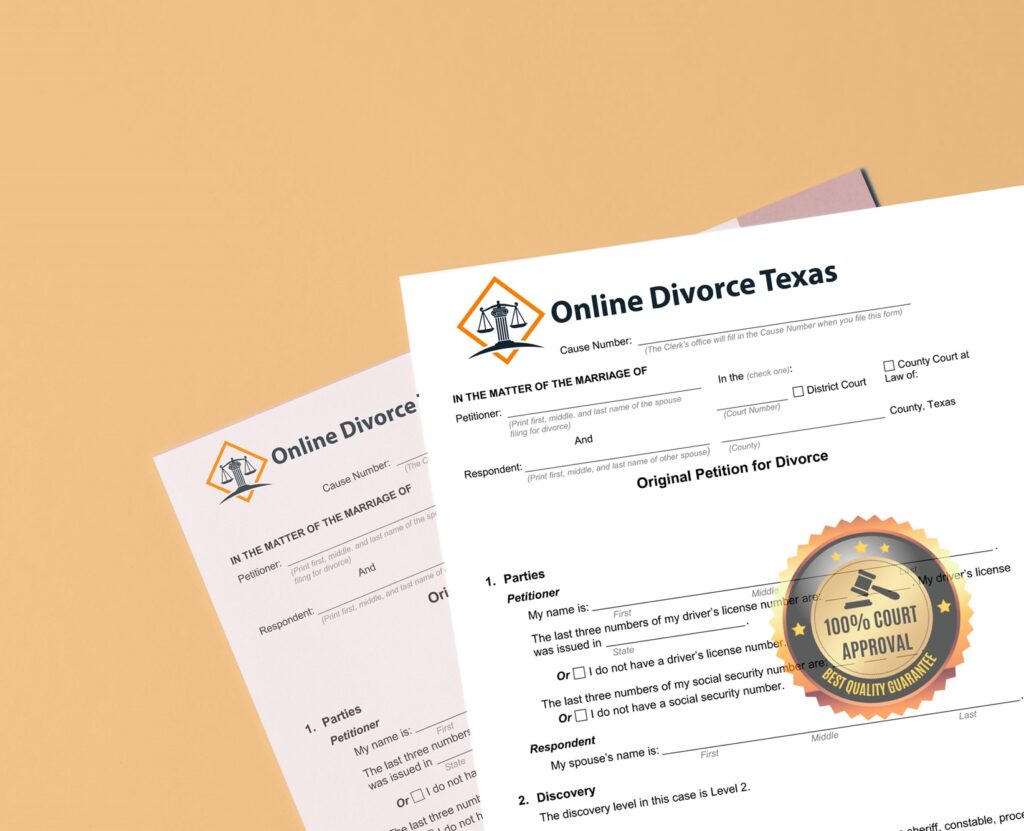
Ready to Begin Your Divorce?
Create your free account to see if you’re eligible to file for online divorce in Texas. Complete all paperwork from the comfort of your home, with no hidden fees.
Step 2: Filing Fees and E-Filing via the District Clerk
In Ector County, Texas, the divorce filing fee is about $350, subject to variation based on specific circumstances. To start, register on the state’s E-Filing website to submit documents electronically. Log in, choose ‘Start a New Case,’ fill in the details, upload forms, and pay the fee online. The District Clerk will then review your submission and issue a case number.Step 3: Service of Process and Waivers of Service
Official Notice via Citation involves delivering divorce papers to your spouse through a sheriff or process server, ensuring they can respond. A Waiver of Service lets your spouse accept the papers without formal delivery, speeding things up if you both agree. Just the waiver requires a notary’s presence and can’t be signed before the divorce filing.Requirements for Parents: The Parent Stabilization Class
In Ector County, Texas, divorcing or disputing custody parents must attend a mandatory Parent Stabilization Class. This four-hour, state-approved course helps parents support their children during family changes and fosters a stable home environment. It’s important to attend a county-specific class to understand local family forces and legal requirements.The 60-Day Waiting Period and Finalizing Your Case in Ector County
In Ector County, Texas, there’s a mandatory 60-day waiting period for uncontested divorces, starting from the petition filing date, allowing time for possible reconciliation. After 60 days, an uncontested divorce can be finalized swiftly. If issues are contested, court-ordered mediation may be required to resolve them without a trial. A successful mediation quickens the process, while unresolved disputes head to court.Erin Bensen is a relationship expert and a writer known for her articles on love and marriage. Being a paralegal, she also writes about divorce and the procedures around it. Erin regularly contributes to Modern Love Counseling and other divorce blogs, offering practical advice and support. Right now, Erin is working on her personal podcast, where she intends to discuss the complexities of relationships and help couples considering divorce.