

Aransas County Family District Court Information
| Info | Details (Aransas County, Texas) |
|---|---|
| Visit Location | Aransas County District Clerk’s Office, Aransas County Courthouse, 308 N Live Oak St, Rockport, TX 78382 |
| Mailing Address | 308 N Live Oak St, Rockport, TX 78382-2745 |
| Contact Information | Phone: (361) 790-0128 | Fax: (361) 790-5211 |
| Office Hours | Monday – Friday: 8:00 AM – 5:00 PM |
| Security Checkpoints | Security screening is required at courthouse entry. Allow extra time for check-in upon arrival. |
| Parking | Public surface lot and street parking available around the new downtown Rockport Courthouse. |
| Prepare for Paperwork | Verify required divorce forms and exact filing fees with the District Clerk prior to filing via eFileTexas.gov or in person to ensure seamless processing. |
Eligibility and Aransas County Requirements
In Aransas County, divorce filing requires six months of residency in Texas and 90 days in the county, consistent with state rules. Most filers opt for a no-fault divorce under “insupportability” (Texas Family Code § 6.001), stating the marriage can no longer be preserved due to conflict without needing to prove fault.
How to File for Divorce in Aransas County: Step-by-Step
Going through divorce in Aransas County requires grasping the legal process and timeline. Start by gathering documents and meeting residency requirements to prepare for filing. You can file in person with the court clerk or online, but details matter if you want a hitch-free process.
Step 1: Preparing the Original Petition for Divorce
To prepare the Original Petition for Divorce in Aransas, get the necessary forms from the local courthouse or the county’s website. Fill in names, addresses, marriage date, divorce grounds, and children’s details. Clearly state any requests regarding spousal support, child custody, and property division. Collect supporting documents like marriage certificates, asset records, and prenuptial agreements. For children, include birth certificates and custody orders. Check your petition and documents for accuracy. Consulting a family law attorney might be smart for meeting legal requirements and addressing specific concerns. Afterward, file the petition with the court clerk and pay the filing fee.
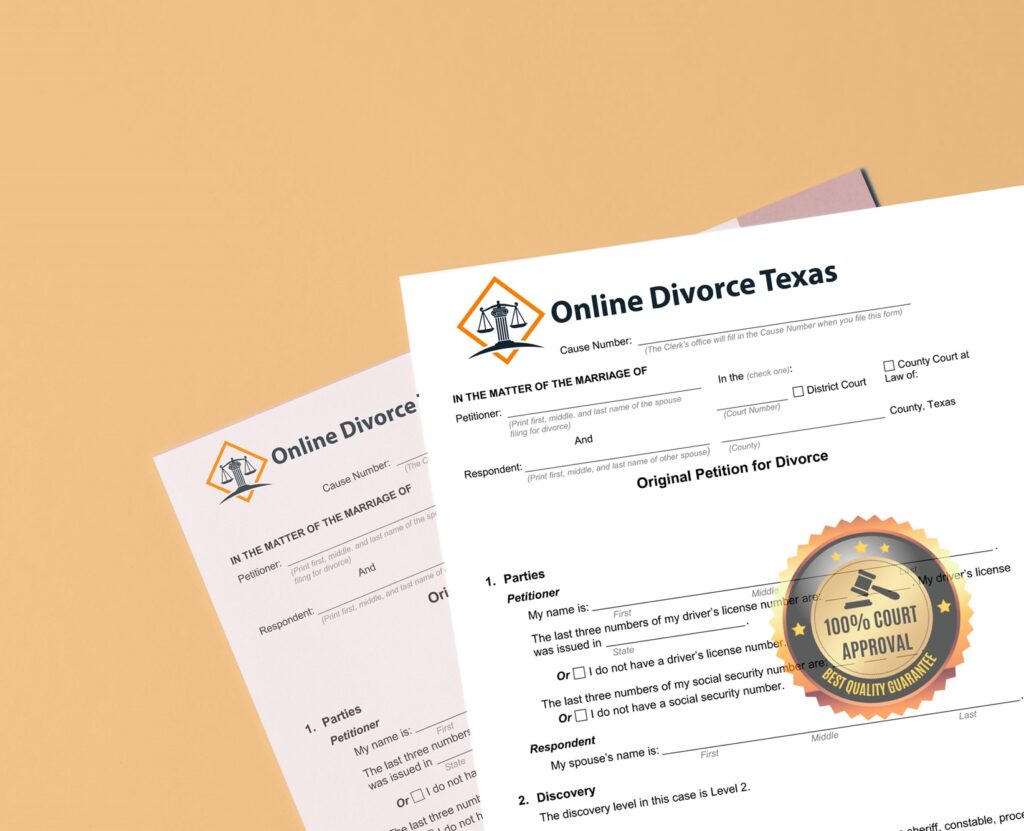
Create your free account to see if you’re eligible to file for online divorce in Texas. Complete all paperwork from the comfort of your home, with no hidden fees.
Step 2: Filing Fees and E-Filing via the District Clerk
In Aransas County, the divorce filing fee is about $350, but check with the District Clerk’s office for the exact amount. You can file electronically using the official portal, eFileTexas.gov. Create an account, upload your divorce petition, and pay the fee online. The District Clerk’s office will then review your documents. Make sure everything is correctly completed and formatted to dodge any processing delays.
Step 3: Service of Process and Waivers of Service
In Aransas, Texas, after filing for divorce, you must serve your spouse with notice of the proceedings, typically through a sheriff or process server. If officially served, your spouse must file an answer by 10:00 a.m. on the Monday next following 20 days after service. Alternatively, if your spouse agrees, they can sign a Waiver of Service in front of a notary. Under Texas law, this waiver must be executed strictly after the Original Petition for Divorce has been officially filed.
Requirements for Parents: The Parent Stabilization Class
In Aransas County, Texas, divorcing or child custody-seeking parents must attend a state-approved Parent Stabilization Class. This four-hour course equips them with skills to focus on their child’s well-being during family changes. Upon completion, parents receive a Certificate of Attendance to file with the court, proving they’ve met this legal requirement.
The 60-Day Waiting Period and Finalizing Your Case in Aransas County
In Aransas County, uncontested divorces require a 60-day wait from the filing date, giving parties time to reconsider. If no disputes arise, the divorce can be finalized quickly after this period. Contested divorces may need court-ordered mediation, where a mediator assists in resolving issues like property division or child custody to prevent lengthy court proceedings.
Erin Bensen is a paralegal with experience helping people prepare Texas divorce paperwork and understand the divorce filing process. She helps people complete divorce petitions, understand court requirements, and identify the forms they may need for their county.
Erin provides document-preparation assistance and procedural guidance, not legal advice. Her goal is to make the divorce paperwork and filing process easier to understand for people who are filing on their own.