

At OnlineDivorceTexas.com, we have helped many clients manage divorce document preparation for a smoother transition. In our guide, ‘Armstrong County Divorce: Requirements & How to File,’ you’ll find all the essential information and instructions for filing for divorce successfully.
Armstrong County Family District Court Information
| Task / Info | Details (Armstrong County, Texas) |
|---|---|
| Visit Location | Armstrong County District Clerk’s Office, Armstrong County Courthouse, 100 Trice St, Claude, TX 79019 |
| Mailing Address | P.O. Box 309, Claude, TX 79019 |
| Contact Information | Phone: (806) 553-2861 | Fax: (806) 553-5981 |
| Office Hours | Monday – Thursday, 8:00 AM – 6:00 PM (Open through lunch); Friday: Closed |
| Security Checkpoints | Security screening is required at courthouse entry. Allow 10–15 minutes for check-in. |
| Parking | Free public street and surface lot parking available around the courthouse in Claude. |
| Prepare for Paperwork | Verify required divorce forms and exact filing fees with the District Clerk prior to filing to ensure seamless processing. |
Eligibility and Armstrong County Requirements
In Armstrong County, to file for divorce, one spouse must have lived in Texas for at least six months and in Armstrong County for at least 90 days. The county employs a no-fault divorce system, meaning there’s no need to prove misconduct. Most filers opt for a no-fault divorce under “insupportability” (Texas Family Code § 6.001), indicating the marriage cannot be preserved, which avoids proving fault and minimizes conflict. This method keeps personal issues private, leading to a more straightforward and less confrontational process.
The 6-Month Texas Residency and 90-Day County Rule
In Texas, to file for divorce, one spouse must have lived in the state for six months and in the county for at least 90 days. Even if one spouse resides out of state, the Texas resident can still file in their home county, complying with these rules.
How to File for Divorce in Armstrong County: Step-by-Step
Going through a divorce is challenging, particularly in Armstrong County, where strict legal timelines and procedures must be followed. Knowing the legal timeline is key, as it guides everything from preparation to filing. We outline essential preparations, necessary documentation, and legal considerations, leading into the formal filing process via the court clerk or online.
Step 1: Preparing the Original Petition for Divorce
To file for divorce in Armstrong, begin by preparing the Original Petition for Divorce. This document requests the court to end the marriage and covers issues like property division, child custody, and support. Clearly state both spouses’ names and addresses and the divorce grounds, which could be no-fault or fault-based. Provide details about any children, including their names, ages, and living arrangements, and outline your preferences for child custody, visitation, property division, and spousal support, if needed. You must also complete a Civil Case Information Sheet and check if local court rules require attaching standard Standing Orders regarding property and minor children upon filing the initial petition. Ensure all documents are completed accurately, as they’ll guide the divorce process.
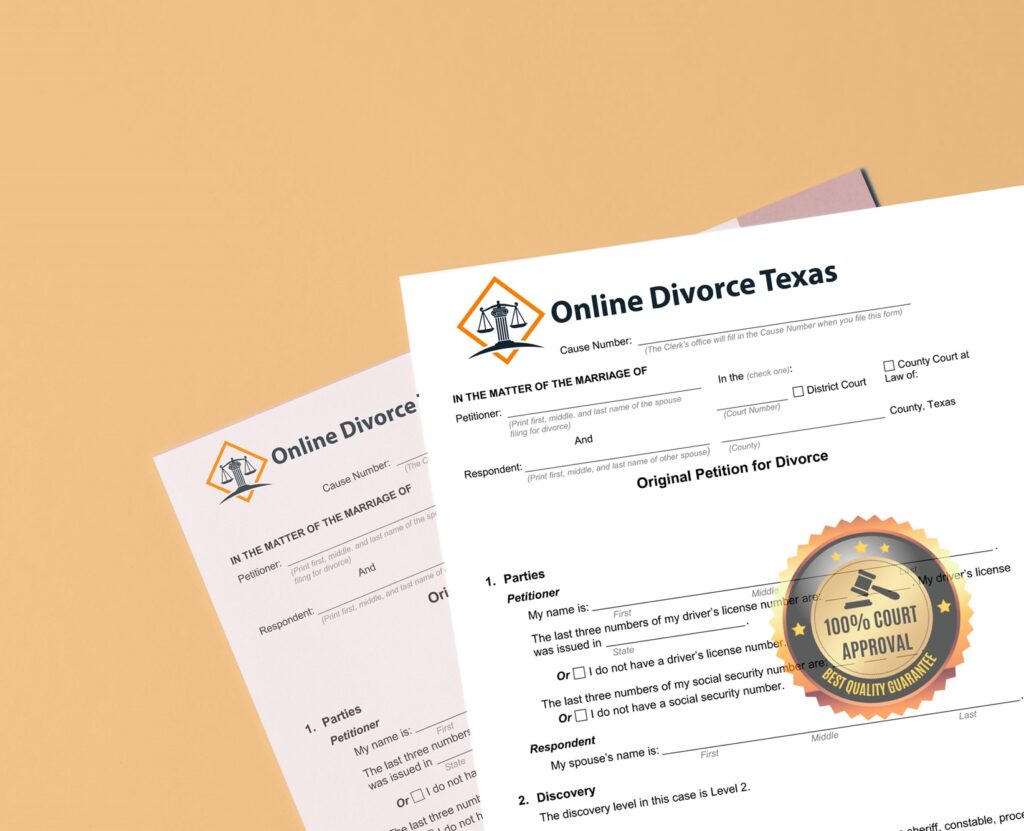
Create your free account to see if you’re eligible to file for online divorce in Texas. Complete all paperwork from the comfort of your home, with no hidden fees.
Step 2: Filing Fees and E-Filing via the District Clerk
In Armstrong County, the divorce filing fee is about $350. Use the District Clerk’s E-Filing system, like eFileTexas.gov, to submit your papers online. Create an account, then prepare and upload your documents, including the divorce petition. Follow submission prompts, pay fees electronically, and adhere to local court rules. After submission, you’ll receive confirmation and a case number, allowing you to track your filing progress.
Step 3: Service of Process and Waivers of Service
Official Notice via Citation formally informs your spouse about the divorce. This is usually handled by a process server or sheriff, who delivers the divorce papers and outlines your spouse’s legal obligations and deadlines. Alternatively, a Waiver of Service allows your spouse to voluntarily acknowledge receipt without formal service. Under Texas law, this waiver must be signed and notarized strictly after the Original Petition for Divorce has been officially filed with the court clerk (signing prior to filing voids the waiver). Timing is key: if formally served, your respondent spouse must file an official answer by 10:00 a.m. on the Monday next following the expiration of 20 days from the date of service.
Requirements for Parents: The Parent Stabilization Class
In Armstrong County, Texas, parents involved in divorce or custody cases must attend a mandatory Parent Stabilization Class to help reduce the emotional impact of separation on their children. When ordered by the court or required by local standing orders, parents must complete a state-approved four-hour Parent Education and Family Stabilization Course to aid co-parenting and support children during the transition. After completing the course, parents receive a Certificate of Completion, which must be filed with the court within the given deadline to avoid any legal delays.
The 60-Day Waiting Period and Finalizing Your Case in Armstrong County
In Armstrong County, a 60-day waiting period starts when a divorce petition is filed to allow reconsideration in uncontested cases, promoting a smoother path to finalization. If disputes arise, court-ordered mediation may be necessary to help parties negotiate an agreement with a mediator’s assistance, sparing them a drawn-out court battle.
Erin Bensen is a paralegal with experience helping people prepare Texas divorce paperwork and understand the divorce filing process. She helps people complete divorce petitions, understand court requirements, and identify the forms they may need for their county.
Erin provides document-preparation assistance and procedural guidance, not legal advice. Her goal is to make the divorce paperwork and filing process easier to understand for people who are filing on their own.