

Blanco County Family District Court Information
| Info | Details (Blanco County, Texas) |
|---|---|
| Visit Location | Blanco County District Clerk’s Office, Blanco County Courthouse Annex, 101 E. Pecan St., Rm 108, Johnson City, TX 78636 |
| Mailing Address | P.O. Box 471, Johnson City, TX 78636 |
| Contact Information | Phone: (830) 868-0973 |
| Office Hours | Monday – Friday: 8:00 AM – 4:30 PM (Closed 12:00 PM – 12:30 PM for lunch) |
| Security Checkpoints | Security screening is required upon entering the courthouse annex. Arrive 10–15 minutes early for check-in. |
| Parking | Public street parking and lot parking are available around the courthouse square and annex in Johnson City. |
| Prepare for Paperwork | Confirm required family law forms and exact filing fees with the District Clerk before submitting via eFileTexas.gov or in person. |
Eligibility and Blanco County Requirements
In Blanco County, to file for divorce, one spouse must have lived in Texas for six months and in the county for 90 days. The county applies a no-fault standard, meaning no need to prove wrongdoing. Texas is a no-fault divorce state, allowing couples to file under the grounds of “insupportability” (Texas Family Code § 6.001), which indicates the marriage can no longer be preserved due to discord or conflict.
How to File for Divorce in Blanco County: Step-by-Step
Filing for divorce in Blanco County requires accurately completing and submitting necessary documents within set deadlines. Understanding the legal framework and timeline ensures a smoother process. When you’re ready, you can file the paperwork with the court clerk in person or online.
Step 1: Preparing the Original Petition for Divorce
To start a divorce in Blanco, Texas, prepare the Original Petition for Divorce. This document initiates the case and includes key marriage details, grounds for divorce, full legal names, addresses, dates of birth, and marriage specifics. Include information about children, desired custody, support arrangements, asset division, debts, and spousal support. Also, prepare a civil case information sheet and if necessary, a sworn financial affidavit covering income, expenses, and property. Accuracy is very important as these documents form your case’s basis. Consulting an attorney can be wise to meet all legal requirements.
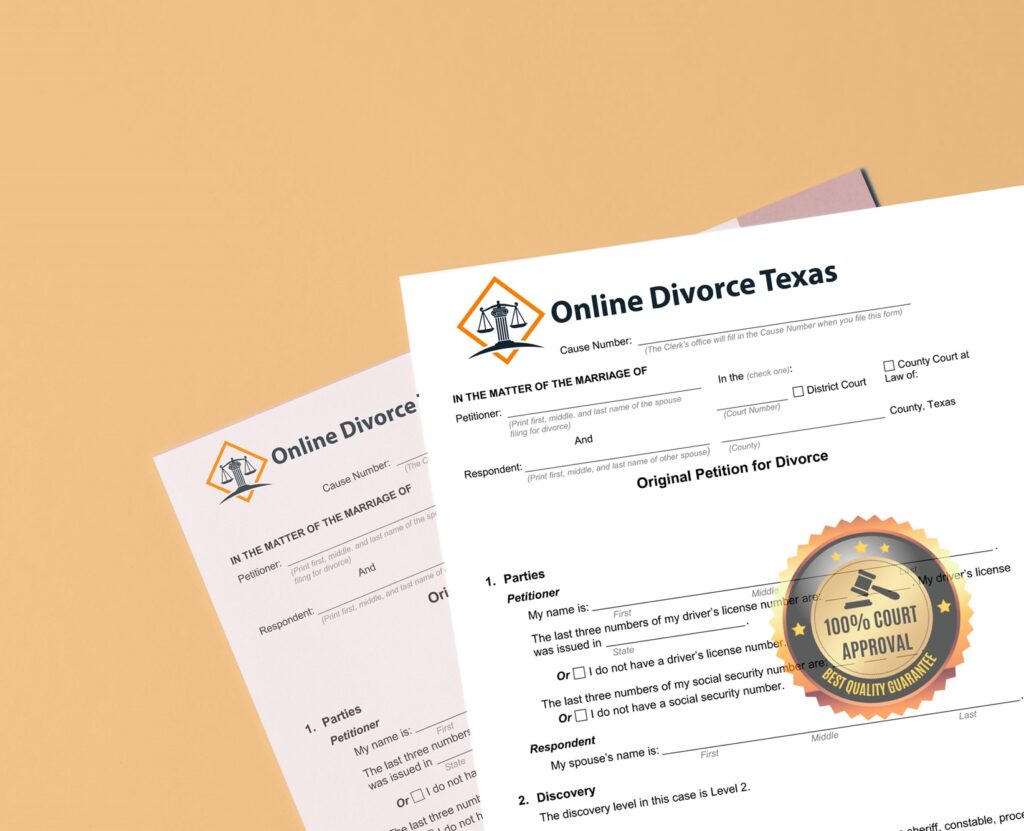
Create your free account to see if you’re eligible to file for online divorce in Texas. Complete all paperwork from the comfort of your home, with no hidden fees.
Step 2: Filing Fees and E-Filing via the District Clerk
In Blanco, filing for divorce requires a filing fee of about $350, but check with the district clerk’s office for the exact amount. Use the E-Filing system for digital submissions: create an account with an authorized provider, upload your prepared divorce documents and forms, and pay the fee online. Make sure your documents follow to local rules to prevent rejection. After submission, the district clerk will file them and provide a confirmation and case number.
Step 3: Service of Process and Waivers of Service
To officially notify your spouse of divorce proceedings, the divorce petition must be delivered to them by a process server, sheriff, or constable. Alternatively, an agreeing spouse can sign a Waiver of Service before a notary to acknowledge receipt without formal service. Under Texas law, the Waiver of Service must be signed and notarized strictly after the Original Petition has been officially filed with the District Clerk.
Requirements for Parents: The Parent Stabilization Class
In Blanco County, Texas, parents involved in divorce or custody disputes must attend a mandatory Parent Stabilization Class. This state-approved, 4-hour course ensures compliance with local regulations and focuses on children’s well-being. After completion, parents receive a Certificate of Completion to file with the District Clerk, confirming they’ve met the legal requirement.
The 60-Day Waiting Period and Finalizing Your Case in Blanco County
In Blanco County, a mandatory 60-day waiting period begins from the divorce filing date to finalize uncontested cases, allowing time for reflection or reconciliation. After 60 days, if both parties agree, the divorce can proceed. If disputes emerge, court-ordered mediation is used to address issues like asset division or child custody. Successful mediation leads to a settlement, avoiding extended court involvement.
Erin Bensen is a paralegal with experience helping people prepare Texas divorce paperwork and understand the divorce filing process. She helps people complete divorce petitions, understand court requirements, and identify the forms they may need for their county.
Erin provides document-preparation assistance and procedural guidance, not legal advice. Her goal is to make the divorce paperwork and filing process easier to understand for people who are filing on their own.