

Coke County Family District Court Information
| Step | Description |
|---|---|
| Visit the Clerk’s Office | Go to the Coke County District Clerk’s office at 13 E 7th St, Robert Lee, TX 76945. |
| Contact Information | Call the office at (325) 453-2631 for inquiries. |
| Office Hours | Monday to Friday, 8:00 AM to 5:00 PM. Call ahead to confirm. |
| Security Checkpoints | Expect security screenings. Allow extra time for these procedures. |
| Arrive Early | Parking is limited and delays can occur, especially during peak times. |
| Ensure a Smooth Experience | Arriving early ensures you have enough time to handle any queries. |
Eligibility and Coke County Requirements
In Coke County, divorces follow a no-fault guideline, meaning no proof of wrongdoing is needed. Most people opt for the “irretrievably broken” ground, simplifying the process and reducing conflict by skipping the blame game. This choice helps couples address practical issues like asset division and child custody promptly.
The 6-Month Texas Residency and 90-Day County Rule
To file for divorce in Texas, one spouse must live in the state for at least six months and in the filing county for at least 90 days. These residency requirements are very important, particularly if the other spouse resides out of state, as they determine jurisdiction and trial location.
How to File for Divorce in Coke County: Step-by-Step
Filing for divorce in Coke County is a major legal step. Knowing the timeline and requirements ensures a smoother process. As you transition from preparation to officially filing with the court or online, it’s important to understand the specific documents and procedures for Coke County. This guide offers a clear step-by-step path to successfully manage this important process.
Step 1: Preparing the Original Petition for Divorce
To draft an Original Petition for Divorce in Coke County, outline the legal grounds, whether insupportability or fault-based. Include names, addresses, dates of birth for both parties and children. Specify any sought temporary orders like child support or spousal maintenance. Attach proposed asset divisions, custody preferences, and parenting plans. Use forms from the Texas Judicial Branch for compliance, and gather supporting documents such as marriage certificates and financial statements to avoid delays. Verify all documents, make two copies, and submit them to the Coke County district clerk with the filing fee or a waiver request.
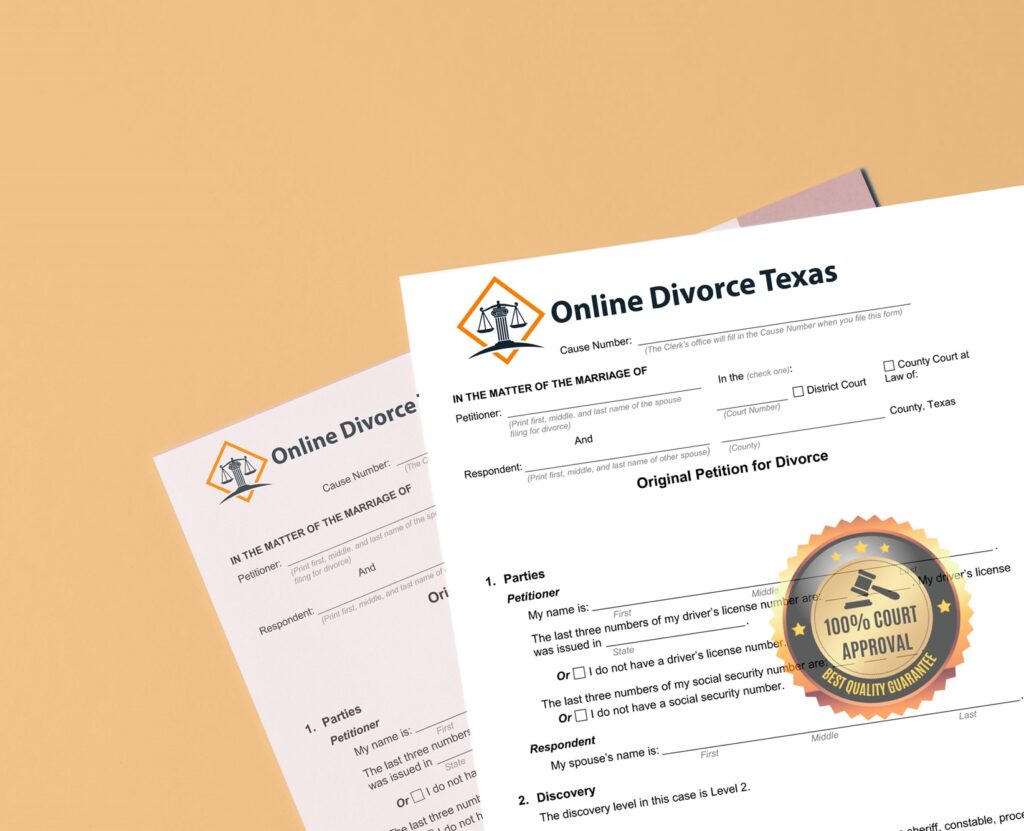
Create your free account to see if you’re eligible to file for online divorce in Texas. Complete all paperwork from the comfort of your home, with no hidden fees.
Step 2: Filing Fees and E-Filing via the District Clerk
The divorce filing fee in Coke County is about $350, but check with the district clerk for the exact amount, as fees may change. E-filing is the way to go; use the state-approved portal to file electronically. Log in, choose the right county and filing type, complete and upload the necessary forms. The district clerk will review your submission, and fees are usually paid at this stage using major credit cards.
Step 3: Service of Process and Waivers of Service
Official Notice via Citation formally informs your spouse of divorce proceedings by delivering the divorce petition through a process server or sheriff. A Waiver of Service allows your spouse to acknowledge receipt of the divorce papers voluntarily, speeding up the process without formal service. Both require notary presence and must meet strict deadlines to remain valid.
Requirements for Parents: The Parent Stabilization Class
In Coke County, Texas, divorcing or custody-changing parents must attend a 4-hour Parent Stabilization Class. This state-approved course focuses on conflict resolution and co-parenting, customized specifically for the county. After completion, a Certificate of Completion must be promptly filed with the court to prevent legal delays.
The 60-Day Waiting Period and Finalizing Your Case in Coke County
In Coke County, Texas, a 60-day waiting period starts when a divorce petition is filed, giving time for reflection and potential agreements. If disputes persist, court-ordered mediation involves a neutral party to negotiate terms.
Erin Bensen is a paralegal with experience helping people prepare Texas divorce paperwork and understand the divorce filing process. She helps people complete divorce petitions, understand court requirements, and identify the forms they may need for their county.
Erin provides document-preparation assistance and procedural guidance, not legal advice. Her goal is to make the divorce paperwork and filing process easier to understand for people who are filing on their own.