

Collin County Family District Court Information
| Step | Details |
|---|---|
| Visit Location | Collin County District Clerk’s Office, Collin County Courthouse, 2100 Bloomdale Rd., Suite 12132, McKinney, TX 75071. |
| Contact Number | (972) 548-4320 |
| Operating Hours | Monday through Friday, 8:00 AM to 5:00 PM |
| Security Checkpoints | Plan extra time for security checkpoints. Arrive early to manage both parking and security smoothly. |
| Parking | Multiple parking lots available, but the spots fill quickly during peak hours. Aim to arrive early to secure parking. |
Eligibility and Collin County Requirements
In Collin County, Texas, to file for divorce, one spouse must have lived in Texas for six months and in Collin County for 90 days. The county uses a no-fault divorce standard, allowing couples to claim the marriage is “irretrievably broken” without proving fault. This method is popular because it streamlines the process, minimizes conflict, and promotes fair asset distribution instead of finger-pointing.
The 6-Month Texas Residency and 90-Day County Rule
In Texas, to file for divorce, one spouse must have lived in the state for six months and in the filing county for 90 days. This is called the 90-Day County Rule. If one spouse is out of state, the Texas resident can still file, but complications with property or custody may occur, requiring legal guidance.
How to File for Divorce in Collin County: Step-by-Step
Divorcing in Collin County requires familiarizing yourself with local legal rules, gathering essential documents, and adhering to Texas divorce laws. Once prepared, you file through the court clerk’s office or online, kicking off the official process.
Step 1: Preparing the Original Petition for Divorce
When preparing the Original Petition for Divorce in Collin County, gather all necessary details upfront. Include full names, addresses, and contact information for both spouses, and clearly state whether the divorce grounds are no-fault or fault-based. Detail any children involved, specifying custody and support preferences. List shared assets and debts, proposing a division plan. Also, complete a Civil Case Information Sheet for basic case details. If minors are involved, fill out a Suit Affecting the Parent-Child Relationship (SAPCR) form. Ensure all documents are notarized and organized before filing.
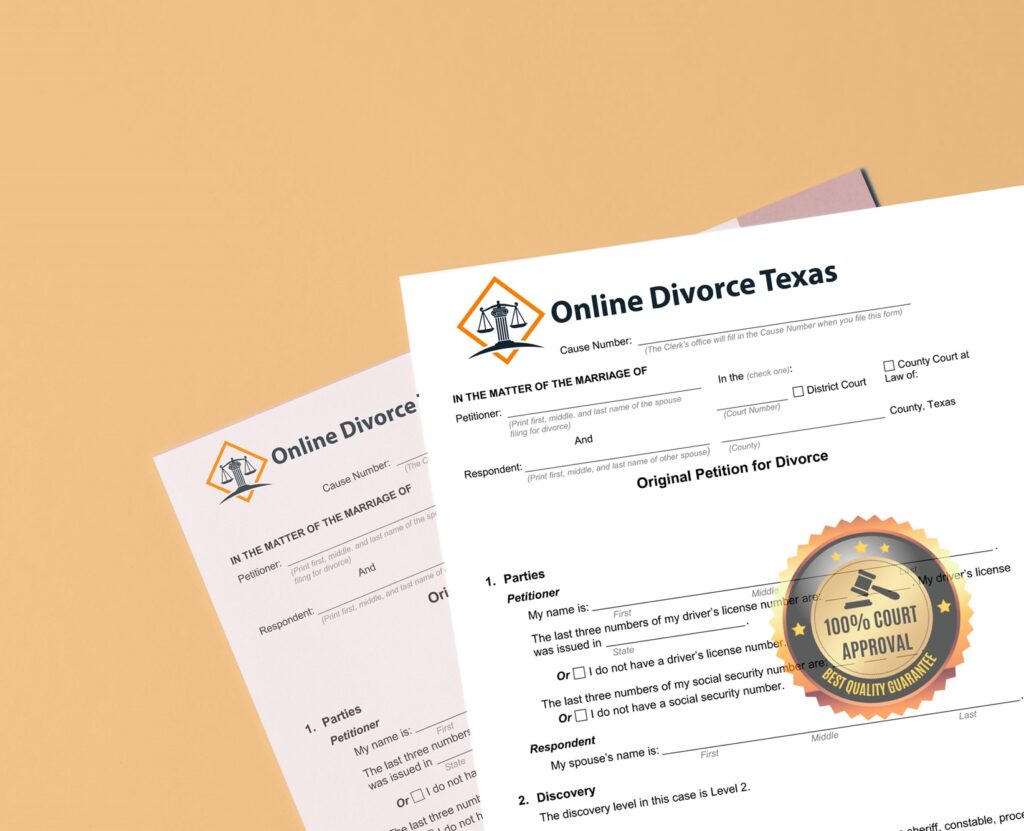
Create your free account to see if you’re eligible to file for online divorce in Texas. Complete all paperwork from the comfort of your home, with no hidden fees.
Step 2: Filing Fees and E-Filing via the District Clerk
The divorce filing fee in Collin County is typically about $350, though it’s wise to check the latest amount with the District Clerk’s office. Use the Texas E-File system to submit your court documents online. Begin by registering an account, logging in, and preparing your documents as PDFs. Fill out the necessary forms, select the correct jurisdiction and file type, and upload your documents. Pay the fee via credit card or electronic check.
Step 3: Service of Process and Waivers of Service
In Collin County, Texas, you must officially notify your spouse of a divorce filing. This can be done by having a sheriff, constable, or process server deliver the papers, or your spouse can sign a notarized Waiver of Service. This waiver must be filed with the court quickly to prevent delays.
Requirements for Parents: The Parent Stabilization Class
In Collin County, Texas, parents involved in child custody or divorce proceedings must attend a Parent Stabilization Class. This mandatory, state-approved course – lasting at least four hours – helps minimize the impact of family restructuring on children. A recognized course by Collin County is essential for compliance. Upon completion, a Certificate of Completion must be filed with the family court to meet legal requirements.
The 60-Day Waiting Period and Finalizing Your Case in Collin County
In Collin County, once a divorce is filed, an uncontested case is subject to a mandatory 60-day waiting period for reflection or reconciliation. After this period, if both parties agree, the divorce can be swiftly finalized. Contested divorces may require court-ordered mediation, aiming to settle disputes with a neutral mediator.
Erin Bensen is a relationship expert and a writer known for her articles on love and marriage. Being a paralegal, she also writes about divorce and the procedures around it. Erin regularly contributes to Modern Love Counseling and other divorce blogs, offering practical advice and support. Right now, Erin is working on her personal podcast, where she intends to discuss the complexities of relationships and help couples considering divorce.