

Collingsworth County Family District Court Information
| Location | Contact Information | Operating Hours | Visitor Information |
|---|---|---|---|
| Collingsworth County Courthouse, 800 West Avenue, Wellington, TX 79095 | Phone: (806) 447-5408 | Monday to Friday, 8:00 AM to 5:00 PM (Call to confirm) | Security checkpoint at entrance. Arrive early to secure parking and avoid delays. |
Eligibility and Collingsworth County Requirements
In Collingsworth County, to file for divorce, one spouse must have lived in Texas for six months and the county for 90 days. The no-fault standard simplifies proceedings, focusing on an “irretrievably broken” marriage rather than assigning blame. This reduces conflict, speeds up the process, and minimizes emotional stress.
The 6-Month Texas Residency and 90-Day County Rule
In Texas, before filing for divorce, one spouse must have lived in the state for at least six months, and in the county for at least 90 days. This establishes jurisdiction and venue for the proceedings. If one spouse lives out of state, only Texas residency requirements apply. The Texas resident can file in their county, observing the 90-Day County Rule, while the out-of-state spouse may participate through legal representation.
How to File for Divorce in Collingsworth County: Step-by-Step
Filing for divorce in Collingsworth County demands understanding the procedures and meeting deadlines. Be prepared before filing, whether at the county court clerk’s office or online, by gathering necessary documents and complying with local regulations for a seamless process.
Step 1: Preparing the Original Petition for Divorce
To file an Original Petition for Divorce in Collingsworth, obtain the necessary forms from the county clerk’s office or the Texas Law Help website. Complete the forms accurately, including personal details like full names, marriage and separation dates. Clearly outline divorce grounds, and specify requests related to child custody, support, and property division. Mention any current protective orders or prior legal actions. You might also need to prepare a Financial Affidavit to declare income, assets, and debts under oath, and possibly other forms like a Civil Case Information Sheet or an Affidavit of Indigency if you can’t afford the fees. Ensure notarization where needed, keep copies for yourself, and submit everything to the court clerk’s office.
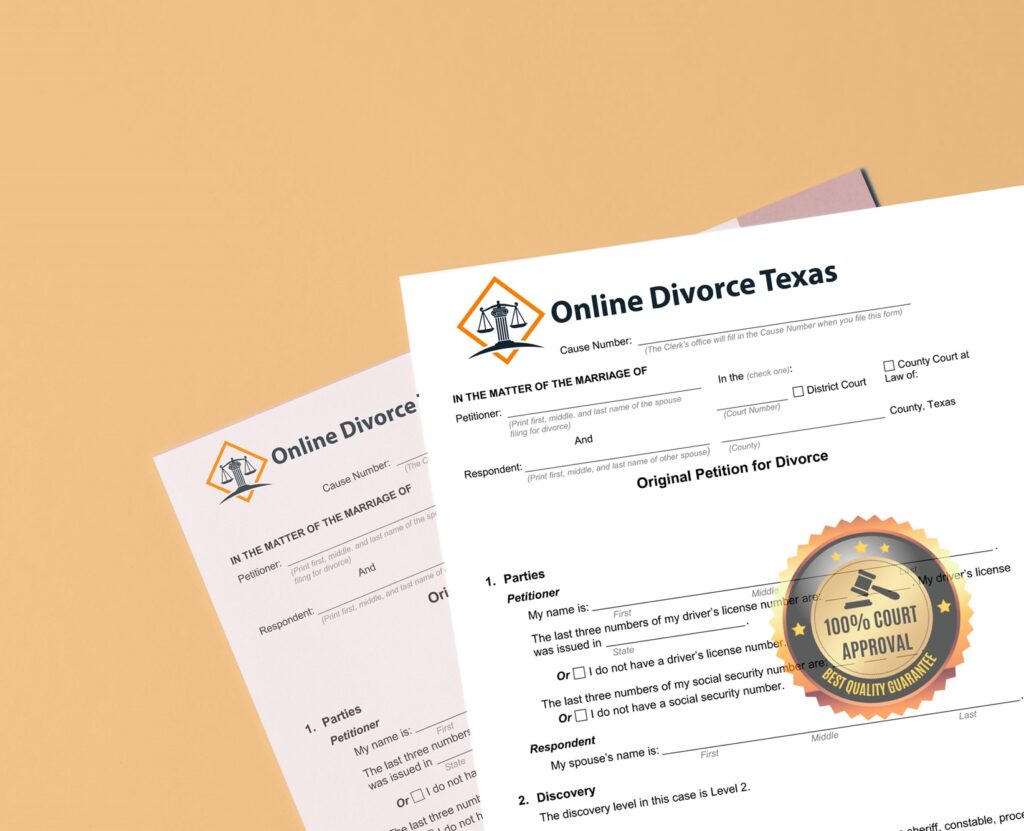
Create your free account to see if you’re eligible to file for online divorce in Texas. Complete all paperwork from the comfort of your home, with no hidden fees.
Step 2: Filing Fees and E-Filing via the District Clerk
In Collingsworth, the divorce filing fee is about $350, paid through the E-Filing system at the District Clerk’s office. Start by registering on the Texas E-File website. Prepare and scan your documents, then log in to upload them, select the case category, and pay the fee with a card. Expect a confirmation receipt upon submission. Keep checking your email for any updates from the District Clerk.
Step 3: Service of Process and Waivers of Service
Official Notice via Citation involves delivering divorce papers to formally inform your spouse about the proceedings, ensuring they can respond. A Waiver of Service, if signed voluntarily by your spouse, allows skipping formal service, thus speeding up the process.
Requirements for Parents: The Parent Stabilization Class
In Collingsworth County, Texas, parents involved in divorce or custody cases must attend a minimum of four-hour Parent Stabilization Class. This course teaches essential skills to support their children’s emotional well-being during these changes. Parents must choose a state-approved vendor to comply with Texas Family Code standards, and the class should address specific local guidelines.
The 60-Day Waiting Period and Finalizing Your Case in Collingsworth County
In Collingsworth County, Texas, there’s a mandatory 60-day wait for uncontested divorces after filing the petition. This period allows for reflection and potential reconciliation. If both parties agree on all terms after the wait, the court finalizes the divorce. For contested issues, the court may order mediation to help the parties reach an agreement with a neutral mediator, potentially bypassing a lengthy trial.
Erin Bensen is a relationship expert and a writer known for her articles on love and marriage. Being a paralegal, she also writes about divorce and the procedures around it. Erin regularly contributes to Modern Love Counseling and other divorce blogs, offering practical advice and support. Right now, Erin is working on her personal podcast, where she intends to discuss the complexities of relationships and help couples considering divorce.