

Dimmit County Family District Court Information
| Step | Details |
|---|---|
| Location | Dimmit County Courthouse, 103 N 5th St, Carrizo Springs, TX 78834 |
| Contact | Phone: (830) 876-4238 |
| Working Hours | 8:00 AM – 5:00 PM, Monday through Friday, excluding holidays |
| Parking | Arrive early to secure parking as spaces fill quickly |
| Security | Prepare for security checkpoints and have necessary identification and documents |
Eligibility and Dimmit County Requirements
In Dimmit County, to file for divorce, at least one person must have lived in Texas for six months and in the county for 90 days. The county allows no-fault divorces, so neither party has to prove specific grounds; they just declare the marriage “irretrievably broken.” This straightforward approach minimizes conflict and speeds up the process.The 6-Month Texas Residency and 90-Day County Rule
In Texas, you can file for divorce if one spouse has lived in the state for at least six months and in the county for at least 90 days. If one spouse lives out of state, the Texas resident usually files in their county. If both spouses qualify in different counties, the first to submit paperwork decides the venue.How to File for Divorce in Dimmit County: Step-by-Step
To file for divorce in Dimmit County, you must grasp the legal details and timelines involved. Start by gathering necessary documents and information to streamline the process. The path starts with preparation and ends with a formal filing, either with the court clerk or online.Step 1: Preparing the Original Petition for Divorce
To prepare the Original Petition for Divorce in Dimmit County, gather necessary details about your marriage: date, place, addresses, and personal information of both spouses. Specify insupportability as the reason, as Texas supports no-fault divorce. Clearly outline requests for child custody, support, alimony, and property division. Include a required Standing Order to prevent asset transfers during the process and file a Civil Case Information Sheet for case details. A Waiver of Service can speed things up if both parties agree. Ensure all information is accurate, as inaccuracies could backfire.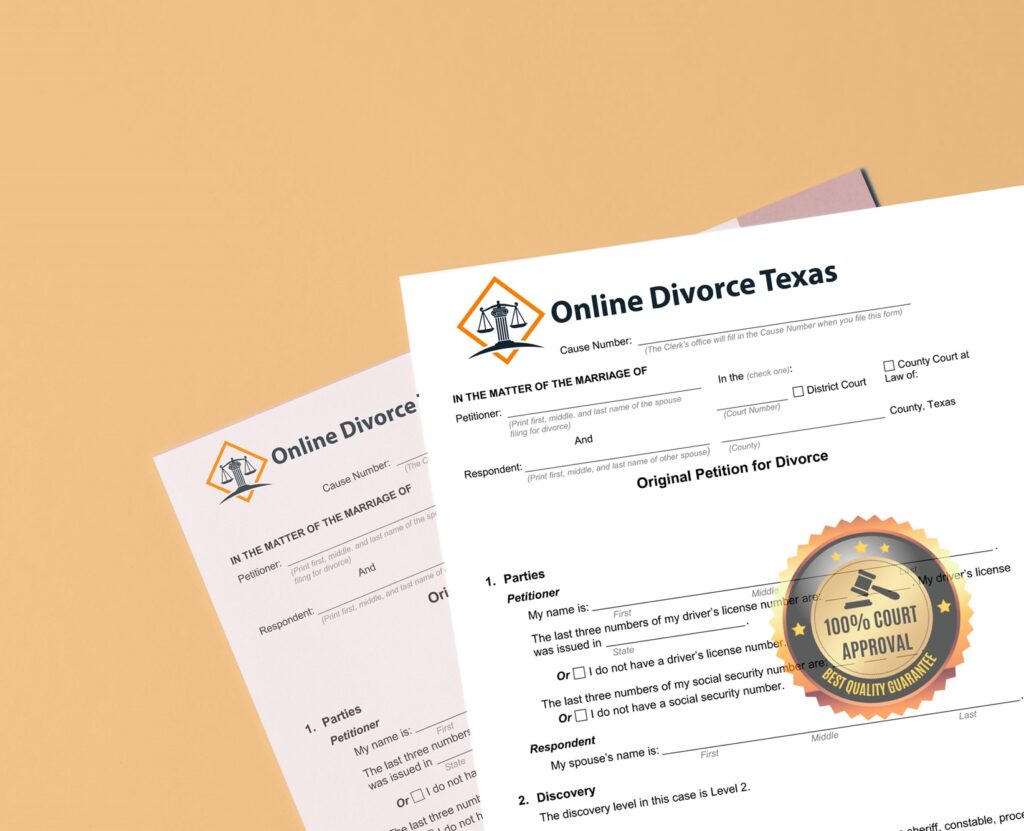
Ready to Begin Your Divorce?
Create your free account to see if you’re eligible to file for online divorce in Texas. Complete all paperwork from the comfort of your home, with no hidden fees.
Step 2: Filing Fees and E-Filing via the District Clerk
Filing for divorce in Dimmit County costs about $350, payable when submitting your petition to the District Clerk’s office. You can expedite the process by using their E-Filing system, requiring an account with an accredited service provider. Once registered, you can upload your completed forms and pay the fee online, ensuring all documents are correctly formatted to prevent delays. After submission, the District Clerk reviews your application and sends confirmation.Step 3: Service of Process and Waivers of Service
In Dimmit, Texas, divorce papers are delivered to the other spouse by a sheriff, constable, or certified process server to officially inform them of the proceedings. the other spouse can sign a Waiver of Service, acknowledging receipt and negating the need for formal service. The waiver must be signed in the presence of a notary public.Requirements for Parents: The Parent Stabilization Class
The Parent Stabilization Class in Dimmit County, Texas, is a mandatory four-hour course for divorcing or separating parents, designed to teach essential co-parenting skills. Offered by state-approved vendors, it ensures consistent, high-quality information customized to local needs and regulations. Completion requires filing a certificate with the court, underscoring its importance in upholding children’s welfare.The 60-Day Waiting Period and Finalizing Your Case in Dimmit County
In Dimmit County, Texas, uncontested divorces require a mandatory 60-day waiting period starting from the filing date. This cooling-off phase is intended for reconciliation or final considerations. Couples can use this time to agree on property division and custody. If disputes persist, the court may order mediation, where a neutral party facilitates a resolution, possibly speeding up the process without a courtroom battle.Erin Bensen is a paralegal with experience helping people prepare Texas divorce paperwork and understand the divorce filing process. She helps people complete divorce petitions, understand court requirements, and identify the forms they may need for their county.
Erin provides document-preparation assistance and procedural guidance, not legal advice. Her goal is to make the divorce paperwork and filing process easier to understand for people who are filing on their own.