

Donley County Family District Court Information
| Task | Details |
|---|---|
| Location | Donley County District Clerk’s Office, 300 S. Sully St., Clarendon, TX 79226 |
| Contact | Phone: (806) 874-0122 |
| Operating Hours | Monday – Friday, 8:00 AM – 5:00 PM (excluding holidays) |
| Parking | Parking is limited. Arrive early. |
| Security | Security checks at the entrance may require identification and screening of belongings. |
| Recommendation | Arrive early for a smoother and less stressful experience when filing paperwork. |
Eligibility and Donley County Requirements
In Donley County, to file for divorce, you must have lived in Texas for six months and in the county for 90 days. The county allows no-fault divorces, so you don’t need to prove any wrongdoing. Most people choose the “irretrievably broken” option to avoid conflict and make the process less emotionally draining.The 6-Month Texas Residency and 90-Day County Rule
In Texas, filing for divorce requires that at least one spouse has lived in the state for six months and in the county of filing for 90 days. These guidelines establish the correct jurisdiction and venue. If one spouse lives out of state, the Texas resident can still file in their county, as long as these residency conditions are met.How to File for Divorce in Donley County: Step-by-Step
To manage divorce in Donley County, you must understand the legal timeline and prepare thoroughly. Gather necessary documents and address preliminaries like child custody or property division before filing. You can file with the court clerk in person or online, officially starting your legal path.Step 1: Preparing the Original Petition for Divorce
To file for divorce in Donley County, first obtain the necessary forms from the county clerk’s office or their website. The “Petition for Divorce” should state the legal grounds, such as no-fault reasons like insupportability, or fault-based reasons like adultery. Include full names, contact details, and birthdates of both parties. prepare required documents like the Civil Case Information Sheet, any waivers, and a Request for Temporary Orders if urgent matters like child custody or financial support need addressing. List all marital assets and liabilities for community property division.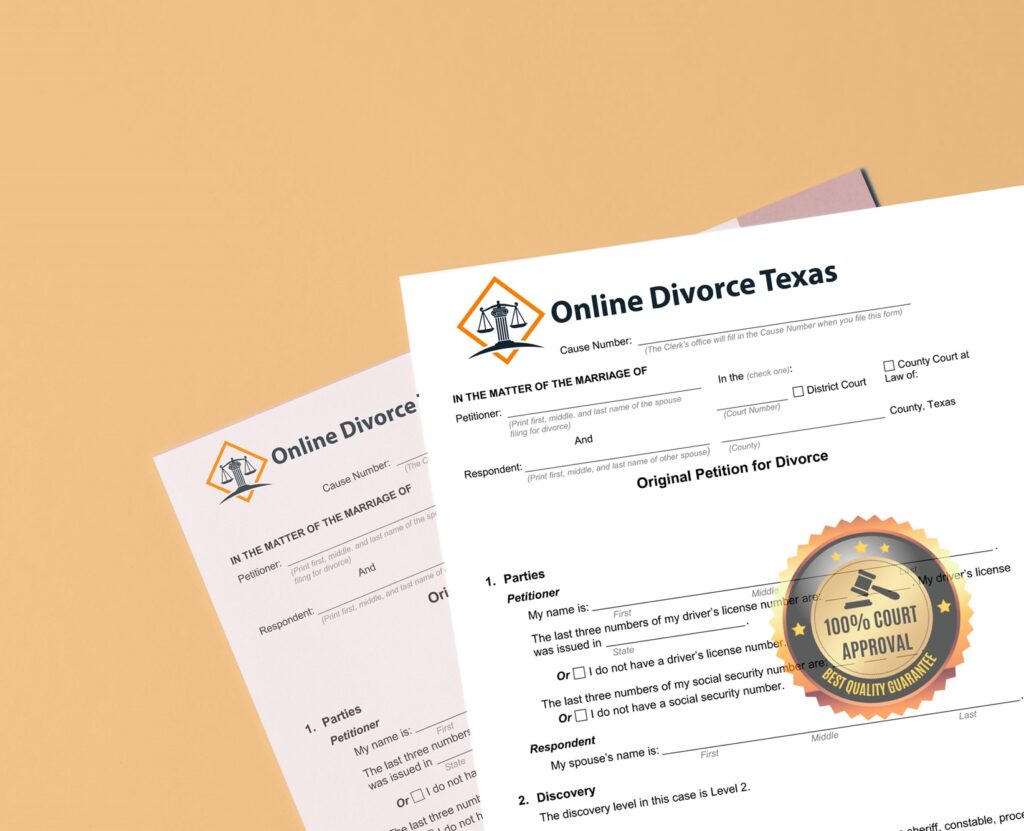
Ready to Begin Your Divorce?
Create your free account to see if you’re eligible to file for online divorce in Texas. Complete all paperwork from the comfort of your home, with no hidden fees.
Step 2: Filing Fees and E-Filing via the District Clerk
The divorce filing fee in Donley County is about $350, but check with the District Clerk’s office for the exact amount. You can file documents online through the Texas E-File system by creating an account, uploading your completed forms, and paying electronically. Remember to select the right county and follow the portal’s instructions. A confirmation email will be sent upon submission.Step 3: Service of Process and Waivers of Service
In Donley, Texas, an Official Notice via Citation formally informs your spouse about the divorce proceedings through a process server delivering the papers. a Waiver of Service lets your spouse accept the divorce petition voluntarily, avoiding formal delivery. This document requires a notarized signature and court filing.Requirements for Parents: The Parent Stabilization Class
In Donley County, Texas, divorcing or separating parents must take the Parent Stabilization Class to support healthier family forces. This four-hour course, taught by a state-approved vendor, is mandatory to understand the separation’s effects on children. Classes may vary, so choose one that meets Donley County requirements.The 60-Day Waiting Period and Finalizing Your Case in Donley County
In Donley County, there’s a mandatory 60-day waiting period for uncontested cases like divorce. This starts when the petition is filed, giving time for potential reconciliation and thoughtful decision-making. If disputes arise, court-ordered mediation helps resolve issues in a confidential setting, possibly avoiding a trial. If mediation doesn’t work, the case moves to court for a judge’s decision.Erin Bensen is a paralegal with experience helping people prepare Texas divorce paperwork and understand the divorce filing process. She helps people complete divorce petitions, understand court requirements, and identify the forms they may need for their county.
Erin provides document-preparation assistance and procedural guidance, not legal advice. Her goal is to make the divorce paperwork and filing process easier to understand for people who are filing on their own.