

Duval County Family District Court Information
| Steps | Details |
|---|---|
| Location | Duval County Clerk of Courts, Duval County Courthouse, 501 W Adams St, Jacksonville, FL 32202 |
| Contact | (904) 255-2000 |
| Office Hours | Monday to Friday, 8:00 AM – 5:00 PM, excluding holidays |
| Parking | Allow extra time for parking as spaces can fill up quickly |
| Security | Be prepared for security checkpoints; bring only necessary documents |
| Recommendation | Arrive early to ensure a smoother experience |
Eligibility and Duval County Requirements
In Duval County, filing for divorce is simple: at least one spouse must have lived in Florida for six months. The county uses Florida’s no-fault divorce rule, so no proof of wrongdoing is needed. Most choose the “irretrievably broken” ground to state the marriage can’t be fixed, skipping the drama of personal grievances.The 6-Month Texas Residency and 90-Day County Rule
In Texas, to file for divorce, one spouse must have lived in the state for six months and in the filing county for 90 days. A Texas court can claim jurisdiction if these residency rules are fulfilled, even if the other spouse lives out of state, although this might complicate service of process and jurisdiction over property and custody.How to File for Divorce in Duval County: Step-by-Step
Going through divorce in Duval County means dealing with legal processes to reach a fair resolution. Understanding the timeline and required documents is essential, whether filing in person or online, to simplify the process before moving on to the next legal steps.Step 1: Preparing the Original Petition for Divorce
To file for divorce in Duval County, obtain the necessary forms from the local Clerk’s office or their website. Accurately complete the petition form with your details, marriage date, and information about any children. Clearly state the grounds for divorce according to Florida law and outline requests concerning property, alimony, child custody, and support. Compile additional documents like a financial affidavit and a Notice of Social Security Number form. If you have children, prepare a UCCJEA affidavit. Carefully review all materials for accuracy before submitting them to the court.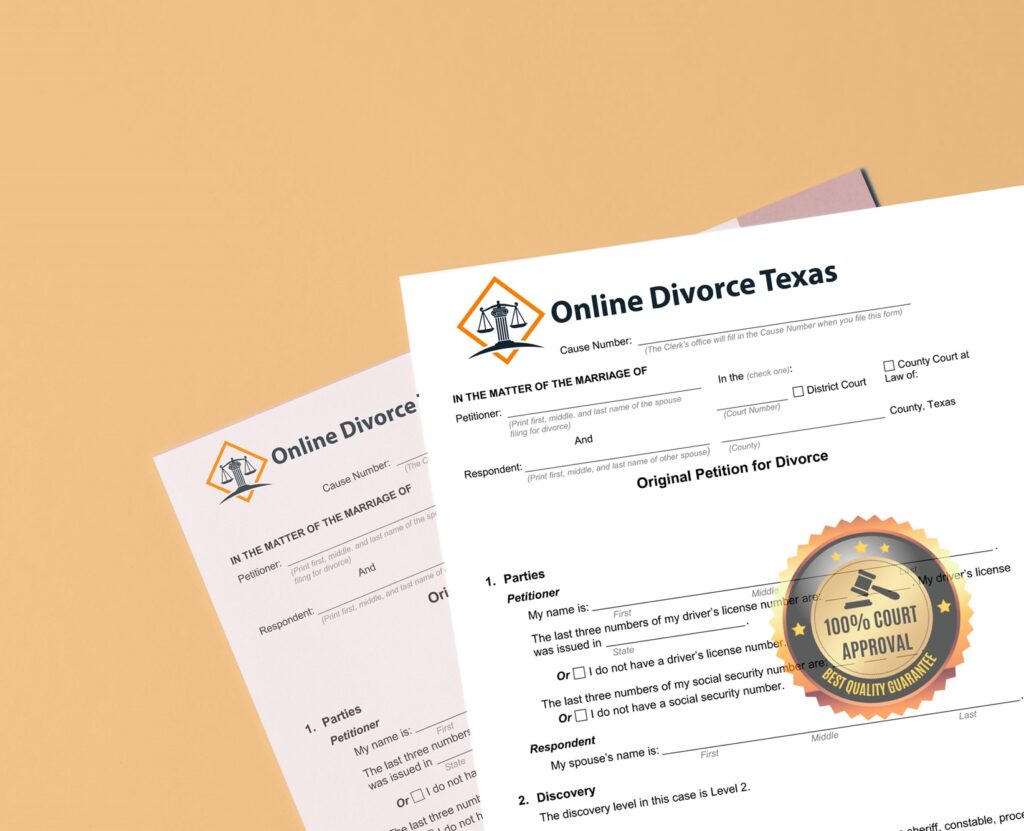
Ready to Begin Your Divorce?
Create your free account to see if you’re eligible to file for online divorce in Texas. Complete all paperwork from the comfort of your home, with no hidden fees.
Step 2: Filing Fees and E-Filing via the District Clerk
In Duval County, the divorce filing fee is around $350, but confirm with the local clerk’s office as it may vary. You must file electronically through the district clerk’s E-Filing system. Create an account, upload your completed divorce petition, and pay the fee online. You’ll receive confirmation once your documents are filed, allowing you to track your case.Step 3: Service of Process and Waivers of Service
Official notice via citation formally delivers divorce papers, ensuring the spouse is informed and can respond. a Waiver of Service lets the receiving spouse acknowledge the papers without formal delivery, speeding up the process. Both require notarization and must follow to specific timing rules to keep the case valid. Simple enough, right?Requirements for Parents: The Parent Stabilization Class
The Parent Stabilization Class in Duval County, Texas, is a required program for divorcing or separating parents. It educates parents on the effects of their situation on children and offers strategies for maintaining positive family forces. The course, conducted by a state-approved vendor, lasts at least four hours and covers essential topics customized for Duval County. Upon completion, parents receive a Certificate of Completion, which must be submitted to the court to meet the county’s legal requirements for child custody and visitation cases.The 60-Day Waiting Period and Finalizing Your Case in Duval County
In Duval County, uncontested divorces require a 60-day waiting period before finalization. This time allows both parties to agree on the terms and make informed decisions. If both agree at the end, the divorce is finalized promptly. In contested cases, court-ordered mediation with a neutral facilitator might be necessary. Should mediation not work, the case heads to trial for a judicial solution.Erin Bensen is a relationship expert and a writer known for her articles on love and marriage. Being a paralegal, she also writes about divorce and the procedures around it. Erin regularly contributes to Modern Love Counseling and other divorce blogs, offering practical advice and support. Right now, Erin is working on her personal podcast, where she intends to discuss the complexities of relationships and help couples considering divorce.