

Falls County Family District Court Information
| Information | Details |
|---|---|
| Location | Falls County Courthouse, 125 Bridge Street, Marlin, TX 76661 |
| Contact | (254) 883-1426 |
| Operating Hours | Monday – Friday, 8:00 AM – 5:00 PM |
| Security Information | Security checkpoints with metal detectors; valid ID required |
| Parking | Limited parking spaces; arrive early |
| Preparation Tips | Allow ample time and prepare necessary documents for a smoother process |
Eligibility and Falls County Requirements
In Falls County, divorce filings hinge on residency and a no-fault standard, which lets couples divorce without assigning blame, thus easing the process and reducing conflict. Most locals opt for the “irretrievably broken” ground, as it avoids proving fault, simplifying proceedings and easing emotional strain.
The 6-Month Texas Residency and 90-Day County Rule
To file for divorce in Texas, one spouse must have lived in the state for at least six months and in the filing county for 90 days. These rules establish the proper venue. Even if one spouse is out of state, the court gains jurisdiction if the other meets these criteria.
How to File for Divorce in Falls County: Step-by-Step
Filing for divorce in Falls County requires several legal steps to ensure fairness. Understanding the timeline is very important as it guides you from preparing to officially submitting your case. After collecting necessary documents, you’ll file your divorce petition with the court clerk or online, officially starting the legal process.
Step 1: Preparing the Original Petition for Divorce
To start a divorce in Falls, prepare the Original Petition for Divorce, which officially begins the process. Gather essential details like names, addresses, and marriage dates. Clearly state your grounds for divorce and any requests for property division, child custody, or support. If you need temporary orders, mention them, and include all necessary forms for Falls jurisdiction. Ensure everything is accurate to avoid delays and consider having a lawyer review it. File the petition with the right district court in Falls, pay the filing fee, and comply with local procedures.
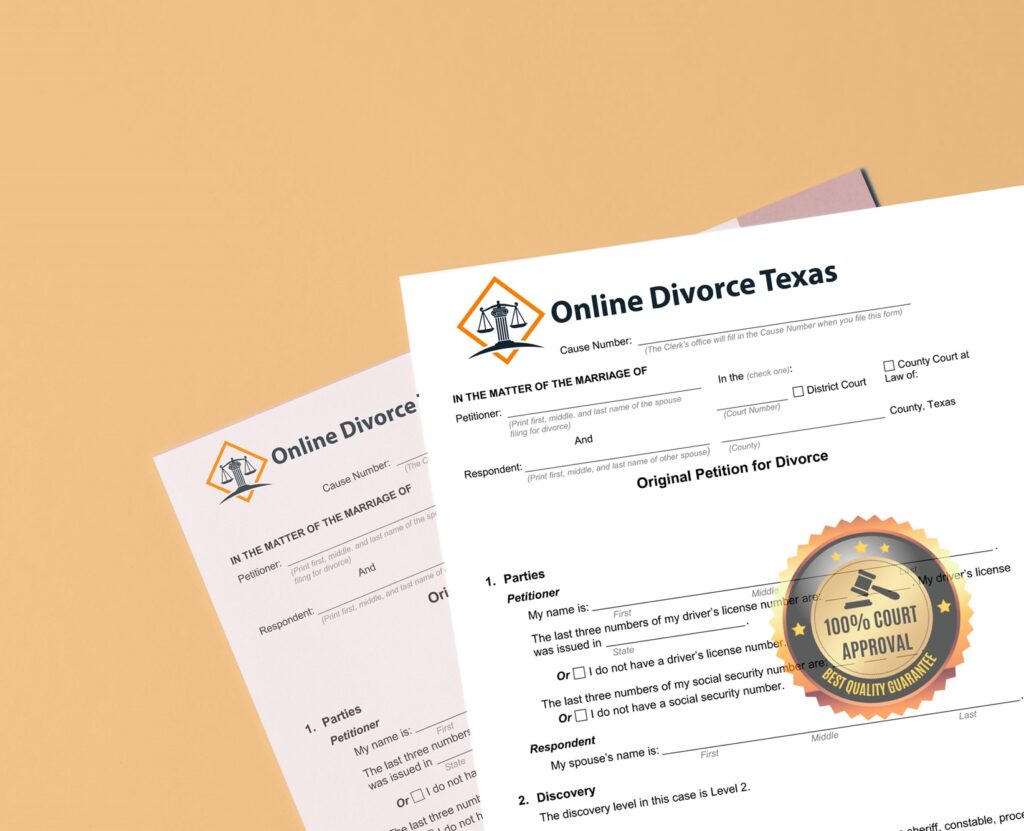
Create your free account to see if you’re eligible to file for online divorce in Texas. Complete all paperwork from the comfort of your home, with no hidden fees.
Step 2: Filing Fees and E-Filing via the District Clerk
The divorce filing fee in Falls County is around $350, but verify with the local district clerk’s office for the latest rate. Use the E-Filing system to submit your divorce petition online by creating an account with an approved service provider. Upload your petition and supporting documents, ensuring accuracy to prevent delays. Pay the fee through the e-filing service, usually by credit or debit card. Your documents will be reviewed by the district clerk, and upon approval, you’ll receive confirmation that your case is filed.
Step 3: Service of Process and Waivers of Service
In Falls, Texas, after filing for divorce, you must inform your spouse through an Official Notice from the court. your spouse can expedite the process by signing a Waiver of Service before a notary, acknowledging receipt of the divorce papers. Any delay or error in serving notice can disrupt the case timeline.
Requirements for Parents: The Parent Stabilization Class
In Falls County, Texas, the Parent Stabilization Class is a required course for parents going through separation or divorce, aimed at helping them manage co-parenting challenges. The four-hour class, provided by a state-approved vendor, covers local regulations and resources. After completing the course, participants must file a completion certificate with the court to comply with legal proceedings.
The 60-Day Waiting Period and Finalizing Your Case in Falls County
In Falls County, after filing a divorce petition, there’s a mandatory 60-day waiting period before finalizing an uncontested case, giving both parties time to reconsider or ensure agreements are fair. Contested cases may involve court-ordered mediation, with a neutral party aiding negotiations. If successful, the agreement goes to the court; otherwise, a judge will decide the unresolved issues.
Erin Bensen is a paralegal with experience helping people prepare Texas divorce paperwork and understand the divorce filing process. She helps people complete divorce petitions, understand court requirements, and identify the forms they may need for their county.
Erin provides document-preparation assistance and procedural guidance, not legal advice. Her goal is to make the divorce paperwork and filing process easier to understand for people who are filing on their own.