

Glasscock County Family District Court Information
| Information | Details |
|---|---|
| Location | Glasscock County District Clerk’s Office, Glasscock County Courthouse, 117 E Currie St, Garden City, TX 79739 |
| Contact | (432) 354-2639 |
| Operating Hours | 8:00 AM to 4:30 PM, Monday through Friday |
| Additional Considerations | Parking availability and security checkpoints at the courthouse entrance. Arrive early for parking and security checks. |
| Preparation Tip | Prepare necessary documents in advance to streamline the filing process. |
Eligibility and Glasscock County Requirements
In Glasscock County, to file for divorce, one spouse must have resided in Texas for six months and in the county for 90 days. The no-fault option simplifies proceedings by not requiring proof of wrongdoing, with most opting for the “irretrievably broken” ground to avoid messy legal fights and focus on a fair settlement.
The 6-Month Texas Residency and 90-Day County Rule
To file for divorce in Texas, one spouse must have lived in the state for at least six months and in the filing county for at least 90 days. This residency ensures a valid connection to the case. If one spouse lives out of state, the divorce can still proceed in Texas as long as these requirements are met by the filing spouse.
How to File for Divorce in Glasscock County: Step-by-Step
Understanding the divorce process in Glasscock County is essential for a smooth transition. Start by gathering necessary documents and familiarizing yourself with local laws. You can file through the court clerk’s office or online. Filing officially begins the legal proceedings, symbolizing the start of separating ties.
Step 1: Preparing the Original Petition for Divorce
To start a divorce in Glasscock, Texas, draft the Original Petition for Divorce. This must include both spouses’ names, the marriage date, and divorce grounds under Texas law. Include children’s names, birthdates, and custody preferences, as well as any requests about property, debts, and spousal support. Accuracy is essential to avoid delays. Prepare a civil case information sheet and, if needed, an Affidavit of Indigency for a fee waiver.
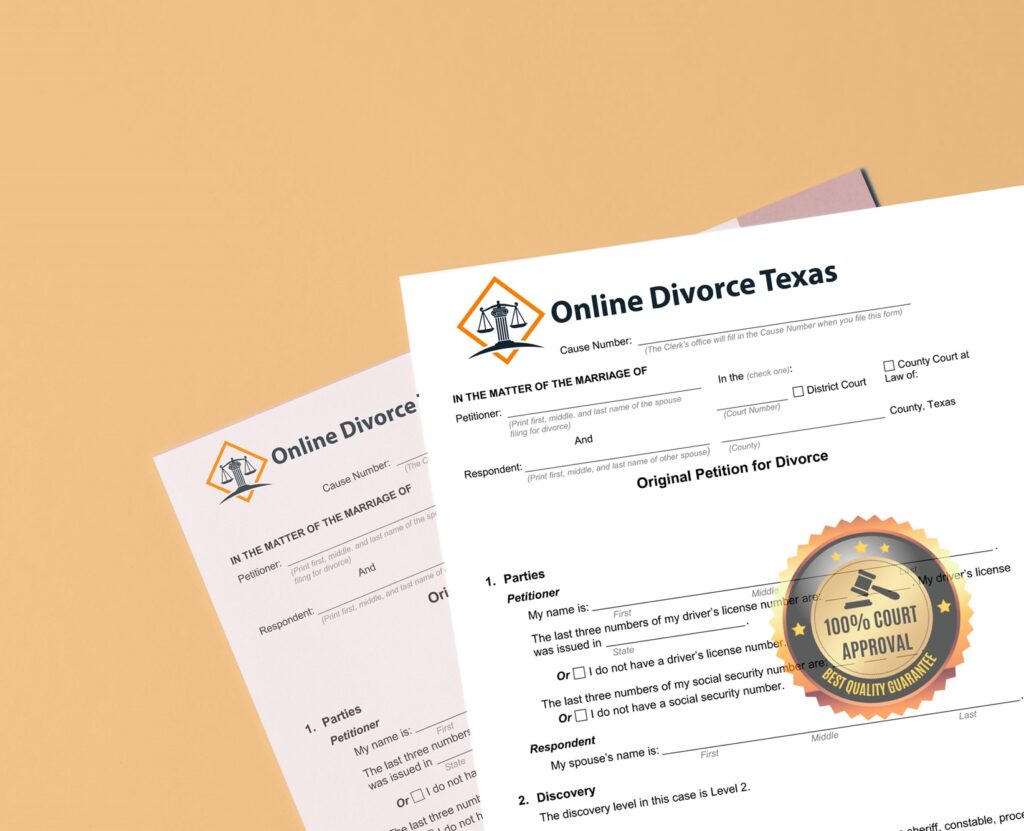
Create your free account to see if you’re eligible to file for online divorce in Texas. Complete all paperwork from the comfort of your home, with no hidden fees.
Step 2: Filing Fees and E-Filing via the District Clerk
The divorce filing fee in Glasscock County is about $350, but you should check with the district clerk for the precise amount based on your case. File electronically via the Texas eFile system by creating an account on eFileTexas.gov, selecting your county, and uploading your documents. Pay the fee with a credit card or e-check. The district clerk will review your submission for completeness and compliance before officially filing it.
Step 3: Service of Process and Waivers of Service
In Glasscock, Texas, after filing for divorce, you must notify your spouse through “Service of Process,” usually a Citation delivered by a sheriff or process server. your spouse can notarize a Waiver of Service to acknowledge receipt without formal delivery. They have 20 days to respond after receiving the Citation, ensuring both parties are engaged in the process.
Requirements for Parents: The Parent Stabilization Class
In Glasscock County, Texas, parents going through separation or divorce must attend a Parent Stabilization Class. This mandatory, four-hour course aids parents in managing co-parenting challenges and is offered exclusively by state-approved vendors to ensure it aligns with county-specific regulations.
The 60-Day Waiting Period and Finalizing Your Case in Glasscock County
In Glasscock County and Texas, there’s a mandatory 60-day waiting period for divorce from the petition filing date, even in uncontested cases. This period allows time for reflection and potential reconciliation. Contested cases may require court-ordered mediation, where a neutral third party helps reach a settlement to potentially avoid trial.
Erin Bensen is a paralegal with experience helping people prepare Texas divorce paperwork and understand the divorce filing process. She helps people complete divorce petitions, understand court requirements, and identify the forms they may need for their county.
Erin provides document-preparation assistance and procedural guidance, not legal advice. Her goal is to make the divorce paperwork and filing process easier to understand for people who are filing on their own.