

Grimes County Family District Court Information
| Step | Details |
|---|---|
| Location | Grimes County District Clerk’s Office, 100 Main St, Anderson, TX 77830 |
| Contact | (936) 873-4435 |
| Operating Hours | Monday to Friday, 8:00 AM to 5:00 PM |
| Security | Security screenings with metal detectors and bag checks |
| Parking | Limited spaces, advisable to arrive early |
| Process Tips | Arriving early helps manage security and ensures a smoother experience |
Eligibility and Grimes County Requirements
In Grimes County, to file for divorce, one spouse must have lived in Texas for six months and in the county for 90 days. Couples often use the no-fault standard, claiming irreconcilable differences, to avoid assigning blame. This approach streamlines the process and reduces conflict, making asset division and responsibility sharing less stressful.
The 6-Month Texas Residency and 90-Day County Rule
In Texas, filing for divorce requires one spouse to have lived in the state for at least six months, and in the specific county for 90 days. This ensures the case is managed in the proper jurisdiction. When a spouse lives out of state, the Texas resident still files under Texas law, which may complicate service and jurisdiction.
How to File for Divorce in Grimes County: Step-by-Step
Divorce in Grimes County can be complex, but understanding the process simplifies it. This guide clarifies your rights and duties, explaining each step from preparation to filing, whether in person or online.
Step 1: Preparing the Original Petition for Divorce
To file for divorce in Grimes, Texas, begin with the Original Petition for Divorce. This document outlines asset division, debts, child custody, and other essential matters. Clearly state the involved parties, marriage, and separation dates. Specify grounds for the divorce, whether no-fault or fault-based, like adultery. Include children’s details if relevant, along with custody plans. Outline your preferred distribution of property and debts. Attach all necessary documents, such as the Civil Case Information Sheet, and an Affidavit of Indigency if you need a fee waiver. Complete the forms accurately to prevent delays, then file them with the Grimes County district clerk and pay the filing fee, unless exempt.
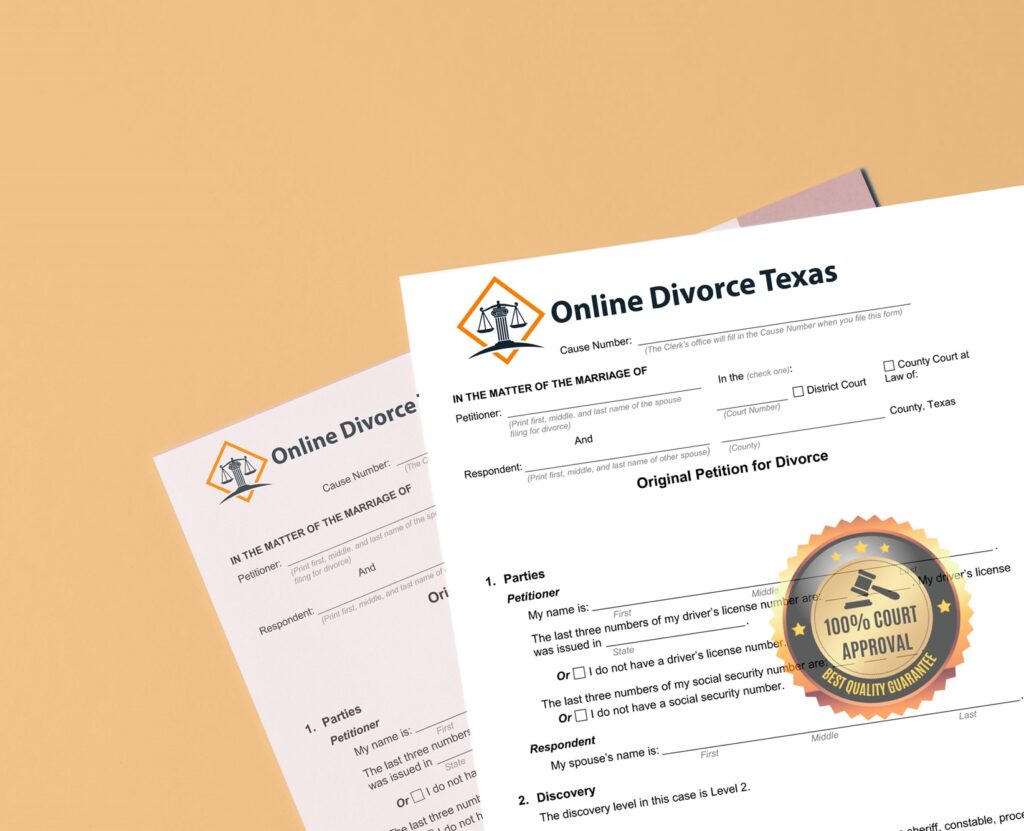
Create your free account to see if you’re eligible to file for online divorce in Texas. Complete all paperwork from the comfort of your home, with no hidden fees.
Step 2: Filing Fees and E-Filing via the District Clerk
To file for divorce in Grimes County, you’ll need to pay a filing fee, typically around $350, but verify the exact amount with the district clerk’s office. Use the Texas E-File website to create an account or log in for electronic submission. Upload and submit your divorce documents according to the formatting requirements. The system guides you in paying the fee and sends email notifications about your filing status.
Step 3: Service of Process and Waivers of Service
In Grimes, Texas, serving process is vital post-divorce petition. It entails notifying your spouse with an official court-issued citation of the divorce proceedings, or they can acknowledge receipt by signing a Waiver of Service before a notary, following specific rules. This ensures the divorce process proceeds both legally and efficiently.
Requirements for Parents: The Parent Stabilization Class
In Grimes County, Texas, divorcing parents with minor children must attend the Parent Stabilization Class, a four-hour course aimed at reducing the impact of divorce on children and promoting cooperative parenting. Only state-approved classes designed for Grimes County are accepted. Upon completion, parents receive a certificate that must be promptly filed with the divorce court, through the court clerk’s office in person or electronically, as per the court’s guidelines.
The 60-Day Waiting Period and Finalizing Your Case in Grimes County
In Grimes County and throughout Texas, a 60-day waiting period is required for divorce cases from the filing date, allowing time for possible reconciliation. Uncontested cases can be finalized soon after this period. For contested cases, mediation may be ordered with a neutral party to help negotiate a settlement. If mediation fails, the case goes to trial for a judge’s resolution.
Erin Bensen is a relationship expert and a writer known for her articles on love and marriage. Being a paralegal, she also writes about divorce and the procedures around it. Erin regularly contributes to Modern Love Counseling and other divorce blogs, offering practical advice and support. Right now, Erin is working on her personal podcast, where she intends to discuss the complexities of relationships and help couples considering divorce.