

Guadalupe County Family District Court Information
| Action | Details |
|---|---|
| Visit the Office | Guadalupe County District Clerk’s Office, 211 West Court Street, Seguin, Texas, 78155 |
| Contact | Phone: (830) 303-4188 ext. 1210 |
| Operating Hours | Monday – Friday, 8:00 AM – 5:00 PM |
| Security | Expect to pass through security checkpoints; allow extra time for potential delays. |
| Parking | Arrive early as parking is limited. |
| Building Layout | Familiarize yourself with the building layout for a smoother experience. |
| Plan Ahead | Early arrival ensures ample time for unexpected paperwork or questions. |
Eligibility and Guadalupe County Requirements
In Guadalupe County, to file for divorce, at least one spouse must meet residency requirements. The county follows a no-fault divorce rule, allowing couples to file without proving wrongdoing, by claiming the marriage is “irretrievably broken.
The 6-Month Texas Residency and 90-Day County Rule
In Texas, to file for divorce, one must meet specific residency requirements: at least six months in the state and 90 days in the filing county. If one spouse lives out of state, the Texas resident can still file in their county, assuming these criteria are met. The court aims to select a convenient jurisdiction, balancing the out-of-state spouse’s location.
How to File for Divorce in Guadalupe County: Step-by-Step
To manage divorce in Guadalupe County, you need to clearly understand its legal framework and timelines. Start by preparing thoroughly – gather all necessary documents and know your rights. When ready, initiate the process by filing your documents with the court clerk, either in person or online.
Step 1: Preparing the Original Petition for Divorce
To begin divorce proceedings in Guadalupe, first prepare the Original Petition for Divorce. This document initiates the process and outlines your requests for ending the marriage. Include both spouses’ names and contact information, marriage details, and grounds for divorce. If applicable, add children’s names, ages, and custody plans. Specify requests for spousal support, property division, and debt allocation. You might also need a Civil Case Information Sheet and, if children are involved, a Proposed Parenting Plan.
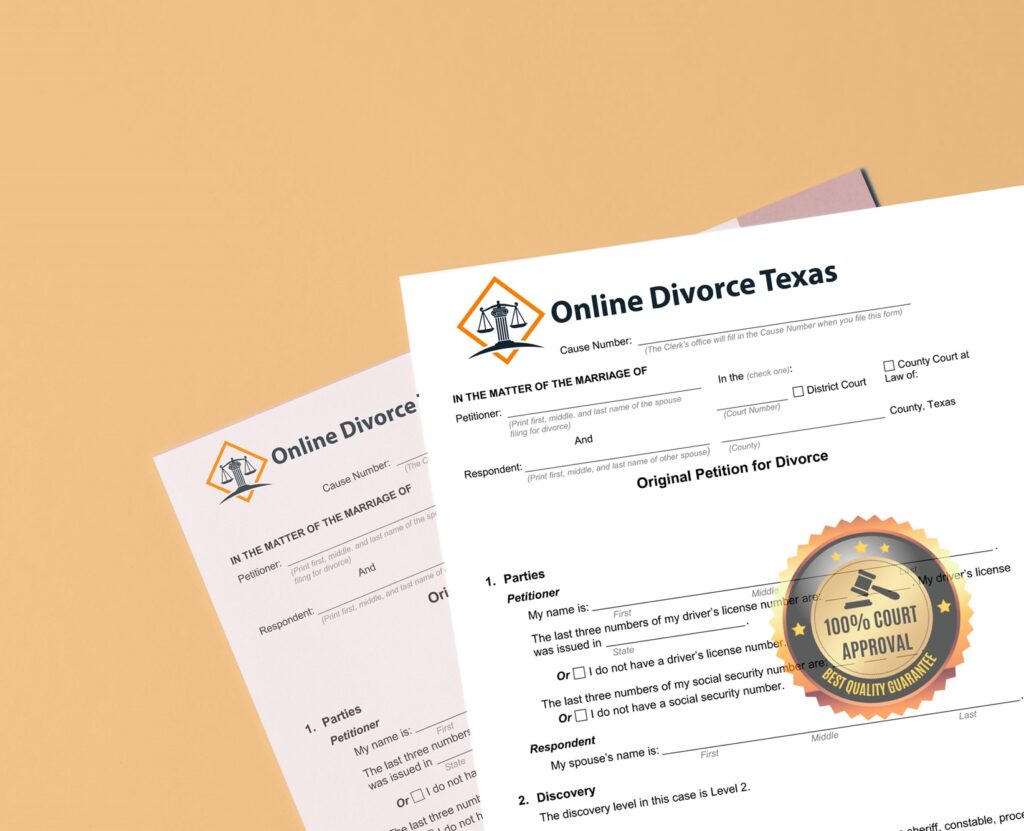
Create your free account to see if you’re eligible to file for online divorce in Texas. Complete all paperwork from the comfort of your home, with no hidden fees.
Step 2: Filing Fees and E-Filing via the District Clerk
To file for divorce in Guadalupe, anticipate a filing fee of about $350, but verify this with the District Clerk’s office. Guadalupe County’s e-filing system allows you to submit documents electronically. Start by registering with an approved Electronic Filing Service Provider (EFSP) and creating an account. After registering, log in to upload your completed divorce petition and any additional forms, ensuring all are filled out correctly and signed. The EFSP will forward your documents to the District Clerk, and you’ll pay the filing fee through this platform.
Step 3: Service of Process and Waivers of Service
In Guadalupe, Texas, a divorce respondent must be notified via Citation, confirming their awareness of the proceedings. they can sign a Waiver of Service, voluntarily acknowledging the petition without formal Citation. Both documents must meet strict notary and timing requirements.
Requirements for Parents: The Parent Stabilization Class
In Guadalupe County, Texas, divorcing or separating parents must attend a mandatory four-hour Parent Stabilization Class. Offered by state-approved vendors, these courses help parents understand the effects of family changes on their children and meet the county’s specific guidelines. After completing the course, participants receive a Certificate of Completion, which they must file with the court to meet legal obligations.
The 60-Day Waiting Period and Finalizing Your Case in Guadalupe County
In Guadalupe County, Texas, there’s a mandatory 60-day waiting period for uncontested divorces, starting when the petition is filed. This period allows for reflection and possible reconciliation. Once it ends and agreements are set, the court can finalize the divorce. For contested cases involving disputes like child custody or property division, the court may require mediation. Here, a neutral party assists in reaching a settlement, ideally avoiding lengthy court proceedings.
Erin Bensen is a relationship expert and a writer known for her articles on love and marriage. Being a paralegal, she also writes about divorce and the procedures around it. Erin regularly contributes to Modern Love Counseling and other divorce blogs, offering practical advice and support. Right now, Erin is working on her personal podcast, where she intends to discuss the complexities of relationships and help couples considering divorce.