

Hardeman County Family District Court Information
| Task | Details |
|---|---|
| Location | 300 S Main St, Quanah, TX 79252 |
| Contact | (940) 663-2961 |
| Office Hours | Monday through Friday, 8:00 AM to 5:00 PM |
| Parking | Allocate extra time for parking; spaces fill up quickly. |
| Security | Arriving early is advised as passing through security checkpoints is mandatory. |
Eligibility and Hardeman County Requirements
In Hardeman County, filing for divorce requires that at least one spouse has lived in Tennessee for six months. The county follows a no-fault divorce system, usually citing “irretrievably broken” as the reason. This approach simplifies and speeds up the process by avoiding the need to prove issues like adultery or cruelty, which can reduce conflict and support amicable settlements.
The 6-Month Texas Residency and 90-Day County Rule
To file for divorce in Texas, one spouse must have resided in the state for at least six months, and at least one must have lived in the filing county for 90 days. Even if one spouse lives out of state, the filing spouse must meet these criteria for Texas courts to have jurisdiction. This maintains proper legal venue.
How to File for Divorce in Hardeman County: Step-by-Step
Divorce proceedings can be overwhelming, particularly with emotions running high. In Hardeman County, knowing the timelines, deadlines, and required documents can reduce stress. Staying organized and informed helps ease the process of submitting paperwork, whether you’re filing with the court clerk or online.
Step 1: Preparing the Original Petition for Divorce
To prepare the Original Petition for Divorce in Hardeman, ensure it meets Texas state requirements. Gather full legal names, contact details, marriage date, and a statement that the marriage is insupportable due to personality conflicts. Include any demands for property division, child custody, visitation, support, and name changes. Attach a Civil Case Information Sheet and an Affidavit of Inability to Pay Court Costs, if necessary. Follow local court formatting and filing guidelines. Use legal templates for reference but tailor them to your case.
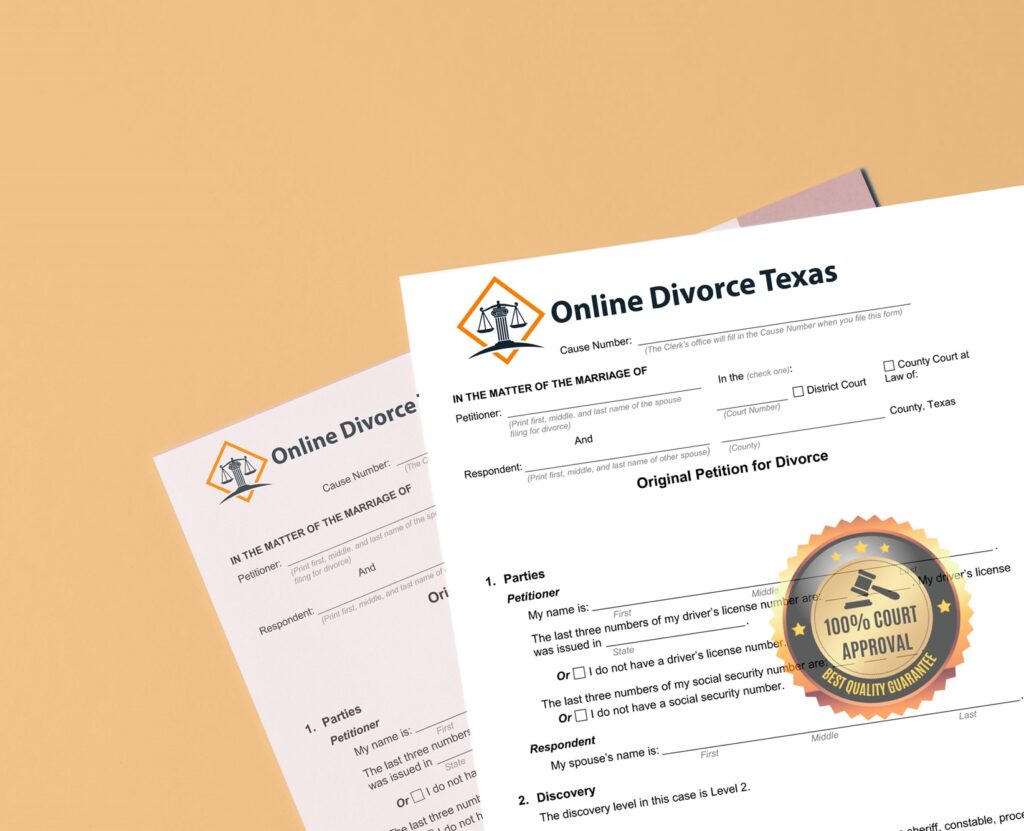
Create your free account to see if you’re eligible to file for online divorce in Texas. Complete all paperwork from the comfort of your home, with no hidden fees.
Step 2: Filing Fees and E-Filing via the District Clerk
The divorce filing fee in Hardeman County is about $350, but confirm with the District Clerk’s office since fees can change. For a smoother process, use the E-Filing system at eFileTexas.gov. Just register, complete all forms correctly, upload your documents, and pay the fee. The District Clerk’s office will review your submission and might issue a case number and court date.
Step 3: Service of Process and Waivers of Service
Official Notice via Citation is the formal delivery of divorce papers to inform the respondent of the legal action, ensuring they can respond. a Waiver of Service allows the respondent to voluntarily acknowledge receiving the divorce petition, which can speed up the process if both parties agree.
Requirements for Parents: The Parent Stabilization Class
In Hardeman County, Texas, divorcing or custody-disputing parents must take a four-hour Parent Stabilization Class to support cooperative parenting and ease children’s stress. Choosing a state-approved vendor is essential to meet county standards. After completing the course, parents receive a Certificate of Completion, which must be filed with the court to prove attendance and meet legal requirements.
The 60-Day Waiting Period and Finalizing Your Case in Hardeman County
In Hardeman County, Texas, uncontested divorces require a mandatory 60-day waiting period starting when the divorce petition is filed. This time allows for reflection or reconciliation. If the divorce remains uncontested, it can be finalized after 60 days. In case of disputes, court-ordered mediation helps negotiate an agreement with a neutral third party. If mediation fails, the case heads to court, prolonging the process.
Erin Bensen is a paralegal with experience helping people prepare Texas divorce paperwork and understand the divorce filing process. She helps people complete divorce petitions, understand court requirements, and identify the forms they may need for their county.
Erin provides document-preparation assistance and procedural guidance, not legal advice. Her goal is to make the divorce paperwork and filing process easier to understand for people who are filing on their own.