

Hays County Family District Court Information
| Steps to File for Divorce | Details |
|---|---|
| Location | Hays County District Clerk’s office at the Hays County Government Center, 712 South Stagecoach Trail, Suite 2211, San Marcos, TX 78666 |
| Contact | (512) 393-7738 |
| Office Hours | Monday – Friday, 8:00 AM – 5:00 PM |
| Parking Advice | Parking can be limited, so arriving early is advisable. |
| Security Checkpoint | Expect a security checkpoint at the entrance. Allow extra time for this process. |
| Preparation | Have all necessary documentation ready to streamline your visit and ensure a smooth filing process. |
Eligibility and Hays County Requirements
In Hays County, to file for divorce, you must reside in the county for 90 days and in Texas for six months. The preferred no-fault option cites the marriage as “irretrievably broken,” simplifying the process by removing the need to prove fault. This approach fosters amicable separations and quicker settlements by focusing on resolution.The 6-Month Texas Residency and 90-Day County Rule
To file for divorce in Texas, one spouse must have lived in the state for at least six months and in the specific county for 90 days. If one spouse lives out of state, the Texas-residing spouse can file in their county once these conditions are met, ensuring the state has jurisdiction over the case.How to File for Divorce in Hays County: Step-by-Step
Divorce in Hays County starts with preparation, followed by filing with the court clerk or online. Understanding the timeline and key milestones eases this path. This guide outlines what to expect as you move from preparation to official filing.Step 1: Preparing the Original Petition for Divorce
To start the divorce process in Hays, draft the Original Petition for Divorce, the document that officially begins the proceedings and outlines key details of the marriage. Gather information like full names, addresses, birthdates of both spouses and any children, specify grounds for divorce – usually insupportability or irreconcilable differences – and include any requests for child custody, support, property division, and spousal support. Ensure your document is accurate and complete to avoid delays. You might need to fill out additional forms such as the Civil Case Information Sheet and an Affidavit of Indigency if requesting a filing fee waiver. Consulting a family law attorney is advisable to meet all legal requirements. Once complete, file the petition with the Hays County district clerk’s office, alongside necessary documents, and keep copies for your records and to serve to your spouse.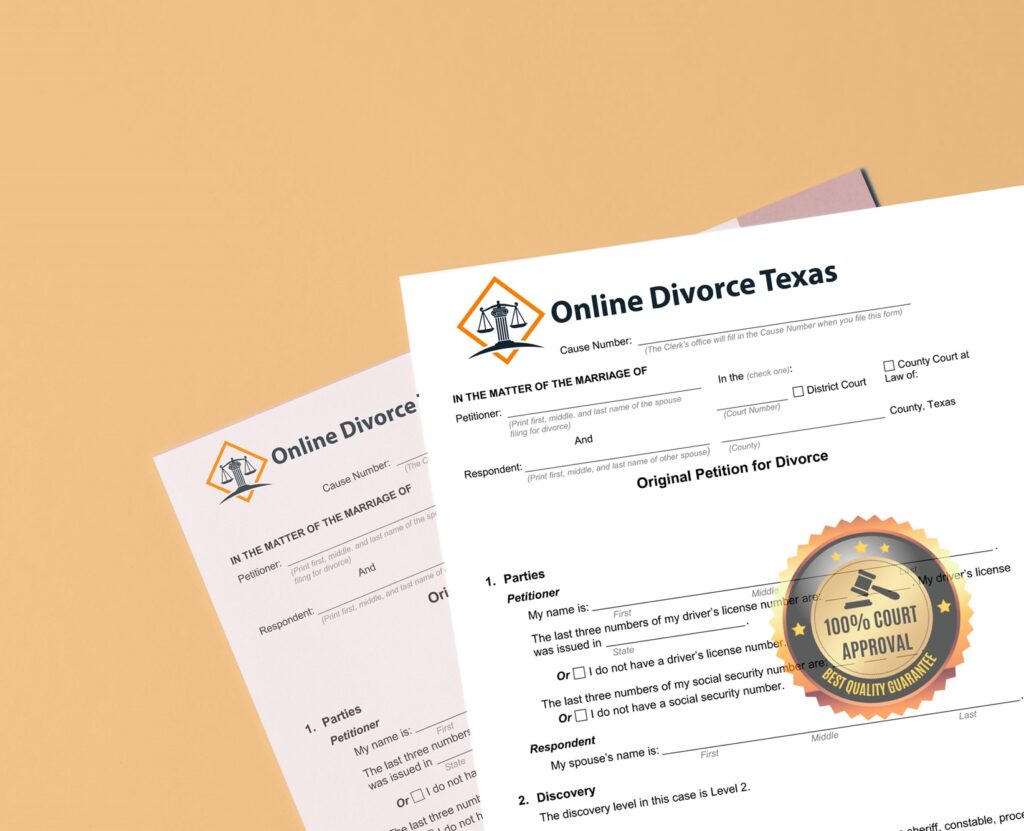
Ready to Begin Your Divorce?
Create your free account to see if you’re eligible to file for online divorce in Texas. Complete all paperwork from the comfort of your home, with no hidden fees.
Step 2: Filing Fees and E-Filing via the District Clerk
In Hays County, the divorce filing fee is about $350. E-file your divorce petition through the district clerk’s office by registering with an approved service like eFileTexas. Upload your completed forms and pay the fee on the platform. Submit the documents and await a confirmation email with stamped copies and a receipt for your records.Step 3: Service of Process and Waivers of Service
In Hays, Texas, after filing for divorce, the other party must be notified through “service of process,” where a sheriff or process server delivers a “citation” of the legal action. they may sign a notarized “waiver of service,” acknowledging the proceedings without formal service.Requirements for Parents: The Parent Stabilization Class
The Parent Stabilization Class in Hays County, Texas, is essential for parents facing divorce or custody changes. This mandatory, four-hour course aids co-parenting post-separation and must be taken with a state-approved vendor to meet Texas Family Code standards, specifically for Hays County. Key topics include conflict resolution, communication, and child psychology. After completion, participants receive a Certificate of Attendance, which must be filed with the Hays County district clerk’s office.The 60-Day Waiting Period and Finalizing Your Case in Hays County
In Hays County, uncontested divorces have a mandatory 60-day waiting period from the petition filing date for reflection. Contested cases may require court-ordered mediation, allowing both parties to negotiate with a neutral mediator to possibly avoid a trial.Erin Bensen is a paralegal with experience helping people prepare Texas divorce paperwork and understand the divorce filing process. She helps people complete divorce petitions, understand court requirements, and identify the forms they may need for their county.
Erin provides document-preparation assistance and procedural guidance, not legal advice. Her goal is to make the divorce paperwork and filing process easier to understand for people who are filing on their own.