

Hood County Family District Court Information
| Location | Contact | Operating Hours | Visit Tips |
|---|---|---|---|
| Hood County District Clerk’s office, 1200 W. Pearl St., Granbury, TX 76048 | (817) 579-3236 | Monday – Friday, 8:00 AM – 5:00 PM | Arrive early to secure parking and allow time for security checks. You’ll need to pass through metal detectors and have belongings screened. |
Eligibility and Hood County Requirements
In Hood County, divorcing involves meeting residency requirements and citing “irretrievably broken” as grounds, thanks to Texas’s no-fault divorce policy. This simplifies and eases the process by avoiding blame and reducing emotional and financial strain.
The 6-Month Texas Residency and 90-Day County Rule
In Texas, to file for divorce, one spouse must live in the state for at least six months and reside in the county of filing for 90 days. These requirements establish court jurisdiction. If one spouse lives out of state, the Texas-residing spouse can still file in their county if the other spouse has enough ties to Texas, like property or business interests.
How to File for Divorce in Hood County: Step-by-Step
To file for divorce in Hood County, you must understand the local legal system and prepare all necessary documents. Start by submitting your paperwork, either in person at the courthouse or online. Being informed about the legal timeline aids in going through the emotional and bureaucratic process, making it more manageable.
Step 1: Preparing the Original Petition for Divorce
To initiate a divorce in Hood County, Texas, prepare the Original Petition for Divorce. This document requests the court to end your marriage and covers child custody, property division, and spousal support issues. Include both spouses’ names, addresses, marriage date, and grounds for divorce – fault-based or no-fault, like insupportability. Specify requests for custody and support, property division, and any alimony. Note any protective orders. Attach a civil case information sheet and, if applicable, a completed local court Standing Order if you have children. Make copies of the petition and legally serve them to your spouse.
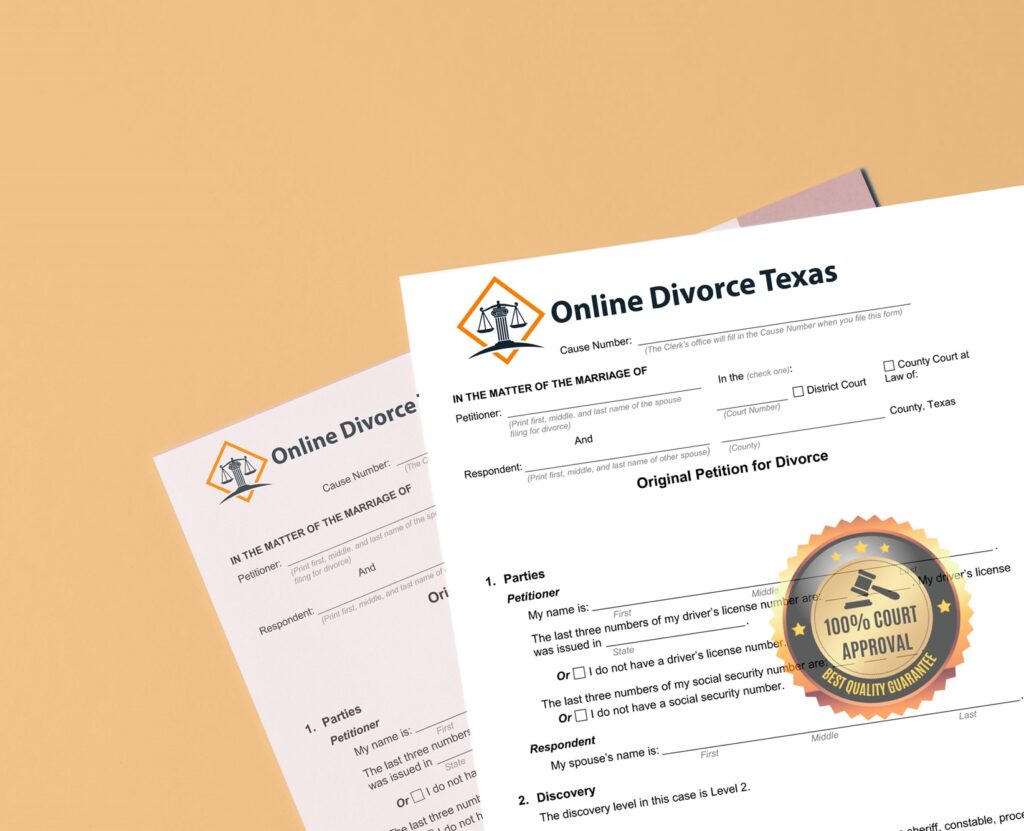
Create your free account to see if you’re eligible to file for online divorce in Texas. Complete all paperwork from the comfort of your home, with no hidden fees.
Step 2: Filing Fees and E-Filing via the District Clerk
To file for divorce in Hood County, Texas, expect to pay a filing fee, usually around $350, but confirm the exact amount with the District Clerk. Use the E-Filing system by registering with a state-approved provider, then upload your documents in the correct format. Be sure to choose Hood County and specify your case type as divorce. The system will then send your documents to the District Clerk for review and processing.
Step 3: Service of Process and Waivers of Service
In Hood County, Texas, after filing for divorce, the other party must be notified through an “Official Notice via Citation” delivered by a sheriff, constable, or process server. the respondent can sign a notarized “Waiver of Service” to acknowledge receipt and expedite the process. Timing is very important due to specific waiting periods and deadlines in Texas law.
Requirements for Parents: The Parent Stabilization Class
In Hood County, Texas, parents going through divorce or custody changes must attend a mandatory Parent Stabilization Class. This four-hour course, provided by a state-approved vendor, addresses co-parenting challenges during family transitions. Completion results in a certificate to be filed with the court, impacting custody and visitation decisions. Failure to attend?
The 60-Day Waiting Period and Finalizing Your Case in Hood County
In Hood County, the 60-day waiting period for divorce starts once the petition is filed, giving time for reflection and potential reconciliation. In uncontested cases, this often results in a smoother and faster resolution. If contested, mediation may be required to resolve disputes with the help of a neutral mediator.
Erin Bensen is a relationship expert and a writer known for her articles on love and marriage. Being a paralegal, she also writes about divorce and the procedures around it. Erin regularly contributes to Modern Love Counseling and other divorce blogs, offering practical advice and support. Right now, Erin is working on her personal podcast, where she intends to discuss the complexities of relationships and help couples considering divorce.