

Brooks County Family District Court Information
| Step | Details |
|---|---|
| Location | Brooks County District Clerk’s Office, 100 E Miller St, Falfurrias, TX 78355 |
| Contact | (361) 325-5604 |
| Hours | 8:00 AM to 5:00 PM, Monday through Friday, excluding holidays |
| Arrival Advice | Arrive early for parking and to manage security checkpoints. |
| Security | There are metal detectors and security personnel. Allow extra time for these procedures. |
| Efficiency Tip | Early arrival helps avoid potential delays. |
Eligibility and Brooks County Requirements
In Brooks County, you must reside in the state for six months and the county for 30 days to file for divorce. The no-fault process, often citing “irretrievably broken” as the reason, streamlines proceedings by avoiding blame, encourages equitable settlements, and reduces conflict.The 6-Month Texas Residency and 90-Day County Rule
In Texas, before filing for divorce, one spouse must have lived in the state for at least six months and in the specific county for 90 days. This residency requirement allows Texas courts to have jurisdiction. If one spouse lives out of state, proceedings can still take place in Texas if the filing spouse meets these residency conditions. The non-resident spouse is notified to ensure they can participate.How to File for Divorce in Brooks County: Step-by-Step
Going through divorce in Brooks County requires understanding the legal process and key steps. Start by gathering necessary documents and preparing forms, which sets the foundation for filing with the court clerk or online, officially beginning the dissolution of your marriage.Step 1: Preparing the Original Petition for Divorce
To file an Original Petition for Divorce in Brooks, ensure you meet the residency requirement: six months in Texas and 90 days in Brooks County. Use Texas-approved forms available on the county’s website or at the district clerk’s office. Include full names, addresses, marriage details, child information, and proposed terms for custody, support, and property division. Attach supporting documents like financial affidavits. Be thorough and accurate, reviewing for compliance with local rules or consulting an attorney.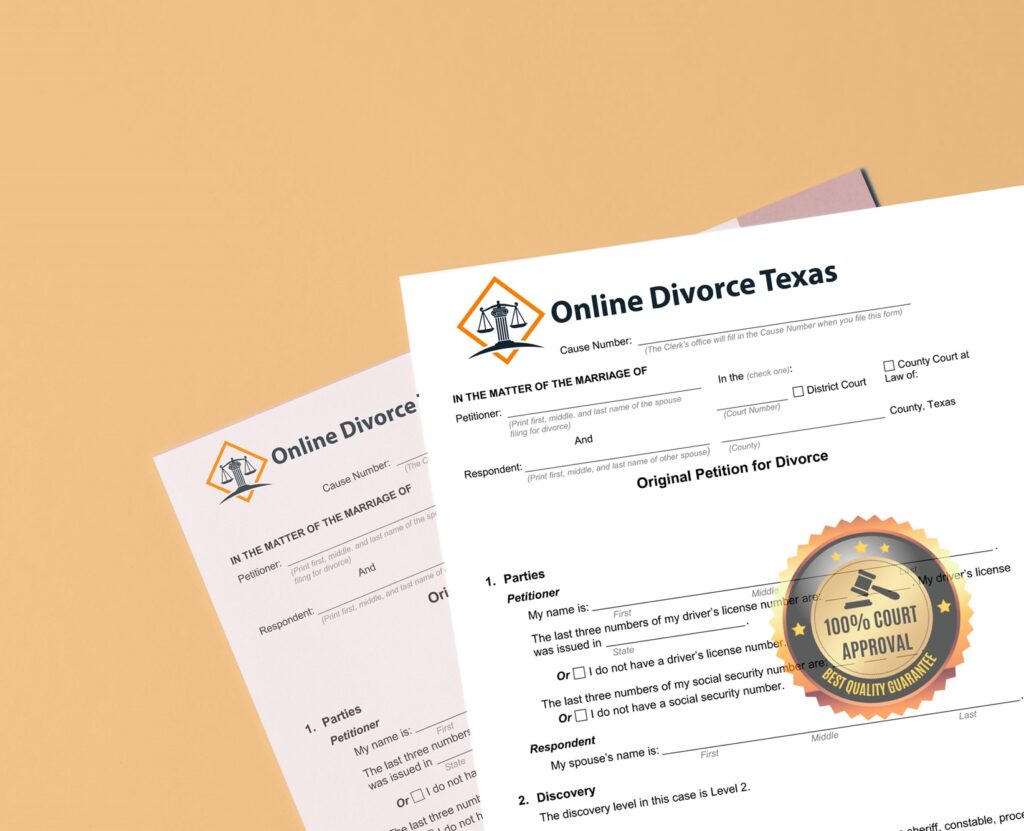
Ready to Begin Your Divorce?
Create your free account to see if you’re eligible to file for online divorce in Texas. Complete all paperwork from the comfort of your home, with no hidden fees.
Step 2: Filing Fees and E-Filing via the District Clerk
To file for divorce in Brooks, a filing fee of around $350 is required; check with the Brooks County District Clerk’s office for the exact amount. The E-Filing system streamlines this by allowing online submission of documents. Create an account on the state-run E-Filing portal, upload your divorce petition and any required documents, and receive a timestamped confirmation as proof of filing. Pay the filing fee online through the same system.Step 3: Service of Process and Waivers of Service
In Brooks, Texas, after filing a divorce petition, you must notify your spouse either through “Official Notice via Citation” or a “Waiver of Service.” The court clerk issues a citation for formal delivery to your spouse, while a waiver involves your spouse acknowledging the petition by signing it. The waiver must be notarized correctly and signed only after the petition is filed to be valid.Requirements for Parents: The Parent Stabilization Class
In Brooks County, Texas, parents going through a separation or divorce must attend a state-approved, 4-hour Parent Stabilization Class. This course focuses on maintaining the children’s well-being by helping parents manage stress, improve communication, and create a positive environment. After completing the class, parents are required to submit a certificate of completion to the court to demonstrate compliance.The 60-Day Waiting Period and Finalizing Your Case in Brooks County
In Brooks County, there is a mandatory 60-day waiting period before finalizing an uncontested divorce to encourage reconciliation and ensure thoughtful decisions. If both parties agree on all terms, the process moves smoothly after this period. If not, court-ordered mediation may be used to resolve disputes with a neutral third party. If mediation fails, the case could go to trial for a judge’s decision.Erin Bensen is a relationship expert and a writer known for her articles on love and marriage. Being a paralegal, she also writes about divorce and the procedures around it. Erin regularly contributes to Modern Love Counseling and other divorce blogs, offering practical advice and support. Right now, Erin is working on her personal podcast, where she intends to discuss the complexities of relationships and help couples considering divorce.