

Castro County Family District Court Information
| Information | Details |
|---|---|
| Location | Castro County Courthouse, 100 E Bedford St, Dimmitt, TX 79027 |
| Contact | (806) 647-4401 |
| Operating Hours | Monday to Friday, 8:00 AM to 5:00 PM |
| Security | Security checkpoints at entrance |
| Parking | Limited spaces, arrive early |
| Advice | Arrive early to complete paperwork within operational hours |
Eligibility and Castro County Requirements
In Castro County, filing for divorce requires meeting residency requirements and proving the marriage is irretrievably broken. Under the no-fault divorce standard, neither party needs to demonstrate wrongdoing, simplifying the process by avoiding blame. This approach reduces conflict, emotional stress, and financial burden, making it ideal for couples aiming for an amicable split.
The 6-Month Texas Residency and 90-Day County Rule
In Texas, to file for divorce, one spouse must have lived in the state for six months and in the county of filing for 90 days. These requirements ensure the court has the right jurisdiction. If one spouse lives out of state, the resident spouse can still file if they meet these criteria. If neither spouse currently qualifies due to absence, they must wait until they do.
How to File for Divorce in Castro County: Step-by-Step
Going through divorce in Castro County demands careful attention to legal procedures and personal readiness. Understanding the timeline and requirements helps in moving smoothly from preparation to filing your case with the court clerk or submitting it online. A methodical approach efficiently respects both legal and emotional aspects.
Step 1: Preparing the Original Petition for Divorce
To start a divorce in Castro, you need to prepare the Original Petition for Divorce, which kicks off the case by detailing your marriage and divorce goals. Ensure the petition includes your full names, addresses, marriage details, children’s information, and grounds for divorce like insupportability or fault-based issues. Specify your preferences for child custody, support, property division, and spousal support. You may also need a Civil Case Information Sheet and an Affidavit of Indigency for a fee waiver. Check local court rules for any variations. File with the Texas county district clerk’s office where residency requirements are satisfied.
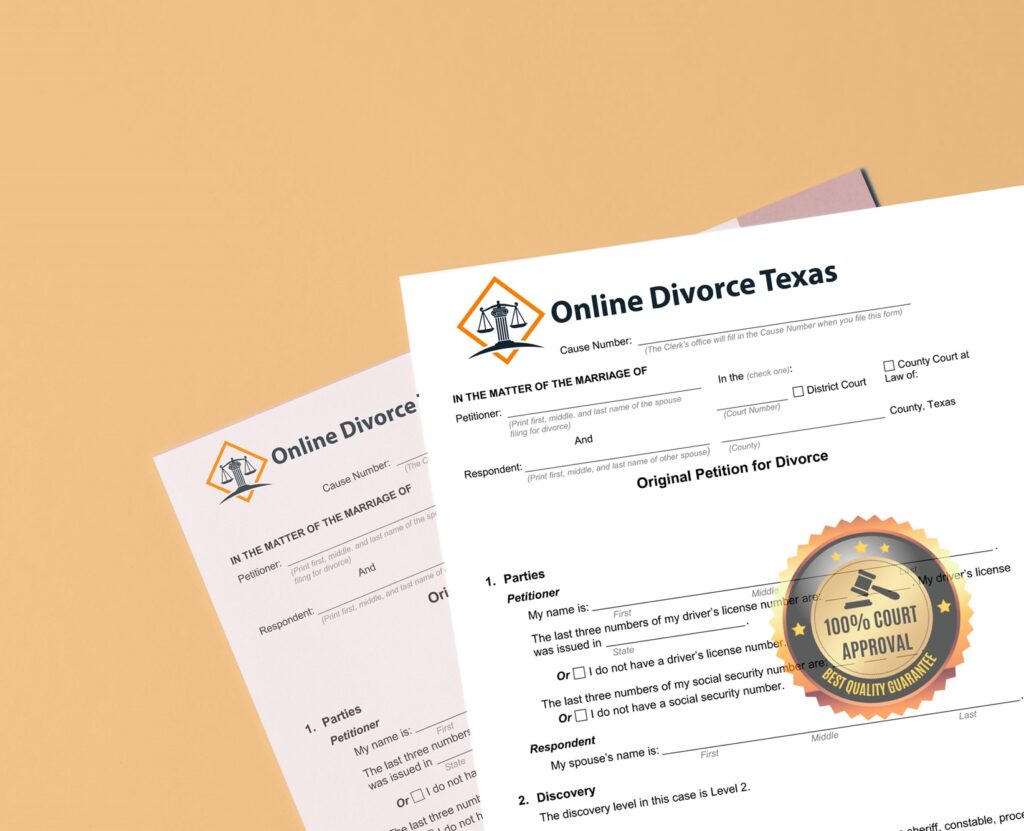
Create your free account to see if you’re eligible to file for online divorce in Texas. Complete all paperwork from the comfort of your home, with no hidden fees.
Step 2: Filing Fees and E-Filing via the District Clerk
To file for divorce in Castro County, pay the approximately $350 filing fee through the district clerk’s office. Many Texas counties, including Castro, offer an E-Filing system. Start by creating an account on the Texas E-Filing portal. Prepare your documents in PDF format, upload them to the portal, and choose Castro County as the filing location. Complete the process by paying online with a credit card or electronic check.
Step 3: Service of Process and Waivers of Service
In Castro, Texas, filing for divorce involves serving your spouse with an Official Notice via Citation or having them sign a Waiver of Service. This waiver acknowledges receipt without formal service, must be notarized, and filed promptly to be legally valid.
Requirements for Parents: The Parent Stabilization Class
The Parent Stabilization Class in Castro County, Texas, is a mandatory four-hour program for parents going through divorce or separation, aimed at providing essential guidance. Conducted by state-approved vendors, the course covers very important topics customized to the county’s requirements. Completion grants a Certificate of Attendance, which must be filed with the court overseeing the case to avoid legal issues.
The 60-Day Waiting Period and Finalizing Your Case in Castro County
In Castro County, uncontested divorces require a 60-day waiting period after filing, giving parties time to reconsider. For contested issues, court-ordered mediation attempts to reach an agreement. If mediation falters, a judge will decide the outcome.
Erin Bensen is a paralegal with experience helping people prepare Texas divorce paperwork and understand the divorce filing process. She helps people complete divorce petitions, understand court requirements, and identify the forms they may need for their county.
Erin provides document-preparation assistance and procedural guidance, not legal advice. Her goal is to make the divorce paperwork and filing process easier to understand for people who are filing on their own.