

Crosby County Family District Court Information
| Step | Details |
|---|---|
| Visit Location | Crosby County District Clerk’s office, Crosby County Courthouse, 201 W. Aspen Street, Crosbyton, TX 79322. |
| Contact Information | Phone: (806) 675-2336 |
| Office Hours | Monday – Friday, 8:00 AM – 5:00 PM (Call to confirm) |
| Additional Tips | Allow extra time for parking and security. Arriving early helps ensure parking availability and a smoother security process. |
Eligibility and Crosby County Requirements
In Crosby County, to file for divorce, you must have lived in Texas for six months and in the county for 90 days. The county allows no-fault divorces, so you don’t need to prove misconduct; simply stating the marriage is “irretrievably broken” is enough.
The 6-Month Texas Residency and 90-Day County Rule
To file for divorce in Texas, one spouse must have lived in the state for at least six months and in the filing county for at least 90 days. These residency requirements allow Texas courts to have jurisdiction over the case. If the other spouse lives elsewhere, the filing must still meet these criteria, based on the Texas resident’s location. Legal advice is advisable for handling these various problems that may occur.
How to File for Divorce in Crosby County: Step-by-Step
Filing for divorce in Crosby County follows a structured process to ensure fairness. Understanding the local timeline is essential, guiding you from the decision to the final decree. Preparation involves gathering documents and understanding the laws.
Step 1: Preparing the Original Petition for Divorce
To prepare a Divorce Petition in Crosby, get the forms from the Harris County District Clerk or the Texas Law Help website. Fill out the petition with details like both spouses’ names and addresses, marriage date, and your grounds for divorce – Texas supports both fault and no-fault options. Include requests for child custody, support, and asset division. Also, prepare any necessary documents, such as the Standing Order for temporary arrangements, and consider a Civil Case Information Sheet for court use. If children are involved, complete a “Suit Affecting the Parent-Child Relationship” (SAPCR). Check everything carefully for accuracy before filing.
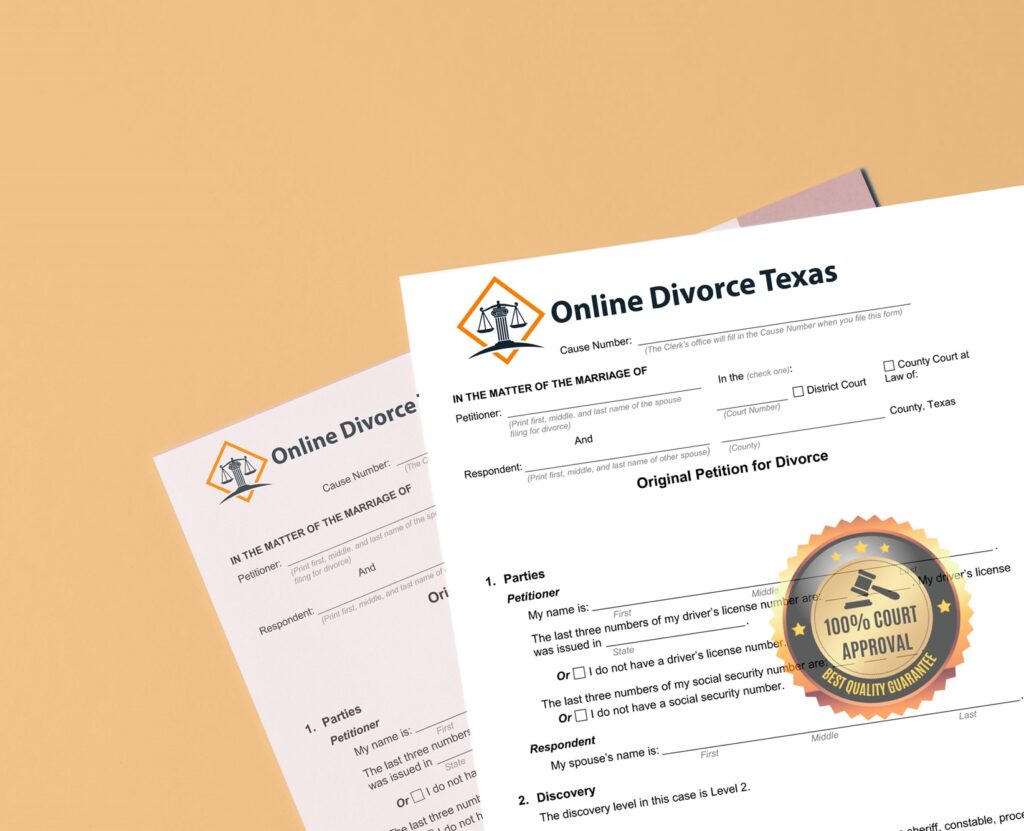
Create your free account to see if you’re eligible to file for online divorce in Texas. Complete all paperwork from the comfort of your home, with no hidden fees.
Step 2: Filing Fees and E-Filing via the District Clerk
In Crosby, Texas, divorces cost about $350 to file, varying slightly by circumstances or county rules. Use the District Clerk’s E-Filing system to submit your documents electronically. Start by creating an account on the state’s E-Filing site. Prepare necessary documents like the Original Petition for Divorce and upload them following the site’s instructions. Pay the fee online. You’ll get a confirmation email, and the District Clerk’s office will officially record your documents.
Step 3: Service of Process and Waivers of Service
In Crosby, Texas, you can notify your spouse about a divorce via a constable, sheriff, or private process server. a Waiver of Service allows them to voluntarily acknowledge receipt, simplifying the process if both parties agree. Ensure the waiver is notarized properly, as precise notary rules apply. there’s a mandatory 60-day waiting period after filing before finalizing a divorce.
Requirements for Parents: The Parent Stabilization Class
In Crosby County, Texas, divorcing or custody-seeking parents must take the mandatory Parent Stabilization Class. This course is four hours long and focuses on reducing children’s emotional distress by teaching co-parenting skills. It must be held by a state-approved vendor and cover local issues to meet community needs. Upon finishing, parents receive a certificate to file with the court, proving they’ve dutifully completed what’s needed for their custody case.
The 60-Day Waiting Period and Finalizing Your Case in Crosby County
In Crosby County, uncontested divorces require a 60-day waiting period from the petition filing date for possible reconciliation or settlement. For contested cases, court-ordered mediation with a neutral mediator might resolve disputes faster.
Erin Bensen is a relationship expert and a writer known for her articles on love and marriage. Being a paralegal, she also writes about divorce and the procedures around it. Erin regularly contributes to Modern Love Counseling and other divorce blogs, offering practical advice and support. Right now, Erin is working on her personal podcast, where she intends to discuss the complexities of relationships and help couples considering divorce.